Understanding Scalp Flaking: Causes, Biology, and Diagnosis
Effective dandruff treatment relies on targeted medicated shampoos containing active antifungal and keratolytic agents—such as ketoconazole, zinc pyrithione, selenium sulfide, or salicylic acid. Applying these formulas directly to the scalp and leaving the lather on for at least five minutes before rinsing allows the active compounds to reduce fungal overgrowth, slow rapid skin cell turnover, and dissolve clumping flakes.
To understand why flaking occurs, we have to look at normal scalp biology. Healthy scalp skin undergoes a continuous cycle of cell renewal termed desquamation. In a balanced scalp, microscopic dead skin cells detach individually and wash away unnoticed, shedding at a baseline rate of roughly 487,000 cells per square centimeter after washing. When flaking is triggered, that number spikes dramatically to around 800,000 cells per square centimeter. Instead of falling away invisibly, these corneocytes stick together in visible clumps.
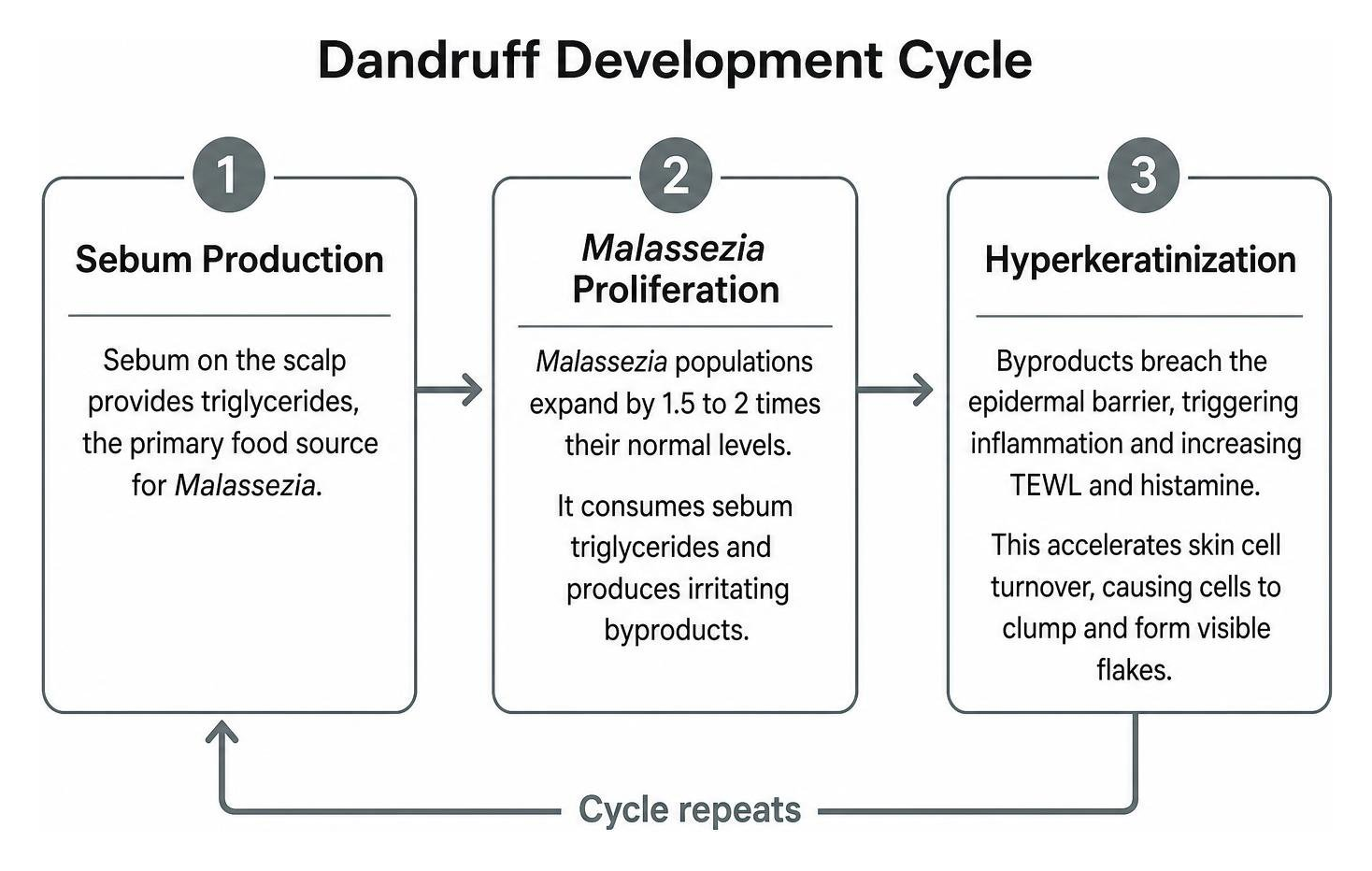
The primary driver behind this accelerated shedding is Malassezia, a lipid-dependent yeast naturally present on human skin. Scalp microflora density generally sits between $10^3$ and $10^5$ organisms per square millimeter. During active flaking episodes, Malassezia populations expand by 1.5 to 2 times their normal levels. This yeast consumes the triglycerides present in scalp sebum and produces irritating byproducts, such as free fatty acids and oleic acid.
In susceptible individuals, these byproducts breach the epidermal barrier, triggering local inflammation, increasing transepidermal water loss (TEWL), and elevating histamine levels—the primary biochemical culprit behind that relentless scalp itch. As detailed in this clinical overview of dandruff and seborrheic dermatitis, diagnosing the root cause typically requires only a visual examination of the scalp, hair, and skin margins by a healthcare professional.
Dandruff exists on a clinical spectrum alongside other common scaling disorders. Understanding where your symptoms fall is critical for targeted relief:
| Condition | Primary Symptoms | Visual Appearance | Scalp Area Affected | Underlying Cause |
|---|---|---|---|---|
| Dandruff (Pityriasis Capitis) | Mild to moderate itching; non-inflammatory flaking | Fine, loose, white or translucent dry flakes | Diffuse across the entire scalp; trapped by terminal hair | Malassezia sensitivity, mild barrier disruption |
| Seborrheic Dermatitis | Intense pruritus; visible erythema; burning sensation | Greasy, yellowish, adherent crusts and scales | Scalp, hairline, eyebrows, nasolabial folds, ears, chest | Malassezia overgrowth, sebaceous dysregulation, immune response |
| Scalp Psoriasis | Stinging, tight sensation; potential bleeding if picked | Well-demarcated, thick, raised, silvery-white plaques | Localized patches; often extends past the hairline to the neck | Autoimmune hyperproliferation of keratinocytes |
While simple dandruff represents the mildest, non-inflammatory end of scalp seborrheic dermatitis, conditions like scalp psoriasis require distinct pharmacological protocols to address rapid autoimmune cell turnover.
Over-the-Counter Dandruff Treatment and Active Ingredients
Over-the-counter options remain the first line of defense against flaking and itch. These formulations target different aspects of scalp pathology: reducing fungal colonization, slowing down epidermal turnover, or chemically dissolving the bonds holding dead skin flakes together. As outlined in international consensus guidelines on scalp seborrheic dermatitis management, managing scalp scaling requires matching the therapeutic agent to the specific severity of the flare-up.
Antifungal and Keratolytic Agents
Medicated shampoos rely on several well-studied active compounds:
- Ketoconazole (1% OTC): A broad-spectrum imidazole antifungal that inhibits fungal ergosterol synthesis. It directly reduces Malassezia populations on the scalp, soothing the underlying cause of fungal-driven desquamation.
- Zinc Pyrithione: A coordination complex with antimicrobial and antifungal properties. It normalizes epithelial keratinization and repairs cellular ultrastructure, helping reduce both yeast load and visible flaking.
- Selenium Sulfide (1% OTC): A cytostatic agent that slows the rate of epidermal cell turnover while reducing Malassezia counts. Note: formulations containing selenium sulfide should be thoroughly rinsed, as they can occasionally discolor light, gray, or chemically treated hair.
- Piroctone Olamine: A second-generation anti-dandruff active known for its excellent safety profile, low toxicity, and ability to control microbial proliferation while remaining gentle on the hair shaft.
- Salicylic Acid and Lactic Acid: Keratolytic agents (BHAs and AHAs) that break down the intercellular cement binding hyperkeratotic corneocytes together. They loosen thick scale, allowing it to rinse away smoothly.
- Coal Tar: A classic antiproliferative and anti-scaling agent that slows down rapid skin cell division. Because coal tar can increase scalp photosensitivity to UV light and stain lighter hair shades, it is typically reserved for stubborn, thick scaling.
Optimizing Your Medicated Dandruff Treatment Routine
Even the most potent medicated shampoo will fail if it is rinsed off too quickly. Many active compounds in dandruff shampoos exist as microscopic precipitates that require prolonged contact time to separate from the lather, settle onto the stratum corneum, and penetrate the follicular infundibulum.

To maximize the efficacy of your wash routine:
- Ensure Direct Scalp Contact: Part your hair in sections and apply the lather directly to the skin of the scalp rather than working it solely through the hair lengths.
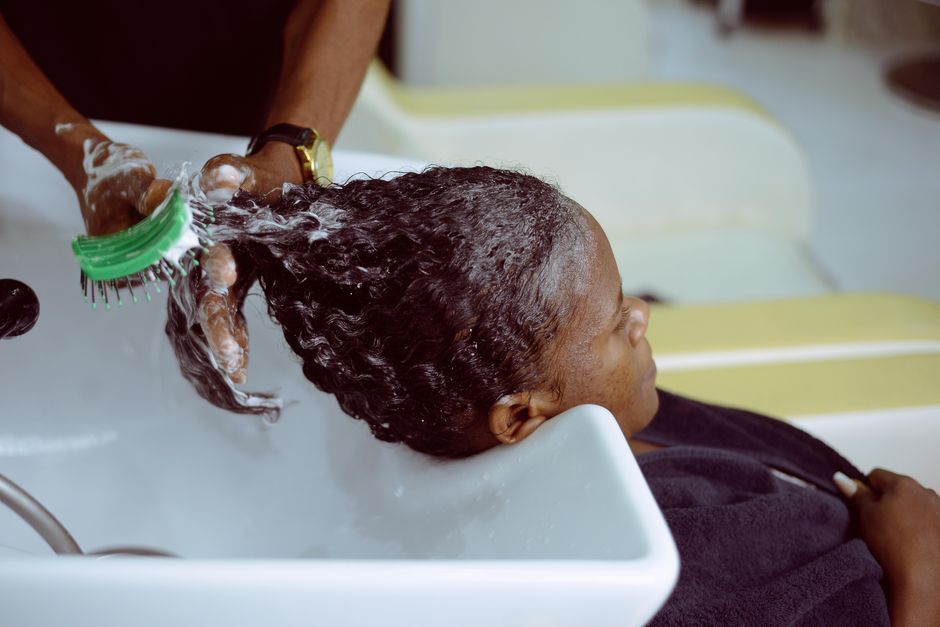
- Maintain a 5-Minute Contact Window: Allow the medicated lather to sit undisturbed on your scalp for at least 5 full minutes before rinsing thoroughly with warm (not hot) water.
- Adjust Frequency by Hair Texture: Individuals with fine, straight, or oily hair often benefit from washing 2 to 3 times per week (or daily during active flare-ups). Those with dry, curly, coiled, or textured hair should limit medicated shampooing to once weekly to prevent fiber dryness, utilizing targeted leave-in scalp preparations or following immediately with a deep moisturizing conditioner.
- Pair with Compatible Conditioners: When using rinse-out conditioners, apply them primarily to the hair mid-lengths and ends. Using a matching anti-dandruff conditioner can boost active ingredient retention on the scalp by 5% to 10%, whereas heavy cosmetic conditioners applied directly to the roots may dilute active compounds.
- Rotate Active Ingredients: If a previously effective shampoo begins losing its potency over time, rotate between two or three formulas with distinct active mechanisms (e.g., alternating an antifungal like ketoconazole with a keratolytic like salicylic acid).
Lifestyle Habits, Home Remedies, and When to See a Doctor
Beyond medicated washes, everyday lifestyle habits and environmental factors play a major role in scalp barrier integrity. Seasonal shifts frequently influence flaking; cold, dry winter air reduces skin barrier hydration, while high emotional or physical stress triggers systemic hormone shifts that alter sebum production and fuel flare-ups. Minimizing heavy styling waxes, dry shampoos, and alcohol-based hair sprays helps prevent product buildup and contact irritation. Brief, protected daily sunlight exposure can also naturally slow epidermal turnover, though facial and bodily skin should always remain protected with broad-spectrum sunscreen.
Natural and At-Home Dandruff Treatment Strategies
Many people look to kitchen staples and botanical oils for gentle relief between medicated washes. While some natural approaches provide supportive comfort, they should be used with realistic expectations:
- Mineral Oil or Coconut Oil Descaling: For thick, stubborn crusts, applying mineral oil or warm coconut oil to the scalp for 1 to 3 hours (or overnight under a shower cap) softens dense scale. Gently comb through with a fine-toothed comb or soft brush to lift loosened flakes before washing with your medicated shampoo.
- Tea Tree Oil: Known for natural antimicrobial and anti-inflammatory properties, tea tree oil (often formulated at 5% concentrations in commercial shampoos) can help reduce mild flaking. However, pure essential oil should never be applied undiluted, as it carries a notable risk of triggering allergic contact dermatitis.
- Aloe Vera: Applied directly to the scalp before washing, aloe vera gel offers cooling, temporary relief from intense itching and surface irritation thanks to its hydrating polysaccharides.
- Apple Cider Vinegar Rinses: Diluted vinegar rinses (such as equal parts water and vinegar) are popular home remedies aimed at balancing scalp pH. While they can help dissolve surface styling residue, there is limited clinical evidence that vinegar directly inhibits Malassezia colonization.
Clinical Escalation and Prescription Therapies
If consistent over-the-counter care does not yield visible improvement after several weeks, or if you notice spreading erythema, skin cracking, crusting, or painful swelling, it is time to consult a medical professional. As described in this professional reference on seborrheic dermatitis diagnosis and management, a dermatologist can provide targeted, high-potency therapies to rapidly calm inflamed skin.
Clinical escalation options include:
- Prescription Antifungals: Formulations like Ketoconazole 2% shampoo or Ciclopirox 1% shampoo and topical gels, which deliver higher concentrations of active agents to clear recalcitrant yeast colonization.
- Topical Corticosteroids: Short courses of low-to-medium potency topical steroid solutions, foams, or lotions (such as fluocinolone, hydrocortisone butyrate, or clobetasol) to quickly arrest severe itching and acute epidermal inflammation. These are used under strict medical guidance to prevent cutaneous side effects like skin thinning.
- Topical Calcineurin Inhibitors: Non-steroidal prescription topicals such as pimecrolimus cream or tacrolimus ointment, useful for sensitive areas (like the hairline, face, and behind the ears) where long-term steroid use is contraindicated.
Frequently Asked Questions About Dandruff
How long does it take for dandruff to clear up?
Clearing visible dandruff flakes typically requires between 5 and 10 consistent washes with an appropriate medicated shampoo. Because skin cell renewal operates on a multi-week biological cycle, therapeutic active ingredients need several consecutive applications to normalize the stratum corneum and suppress Malassezia populations. Once the scalp clears, tapering usage down to a weekly or bi-weekly maintenance wash helps prevent recurring flare-ups.
Why does dandruff shampoo stop working after a while?
When an anti-dandruff shampoo seems to lose its effectiveness over time, it is often due to a clinical phenomenon known as tachyphylaxis, where the skin becomes less responsive to a single active ingredient, or an adaptation within the local scalp microflora. To overcome this plateau, dermatologists recommend rotating among two or three shampoos featuring distinct active mechanisms—such as alternating between an antifungal agent (ketoconazole or zinc pyrithione) and an exfoliating keratolytic agent (salicylic acid).
Can dandruff lead to permanent hair loss?
Dandruff and mild seborrheic dermatitis do not cause permanent hair follicle destruction or scarring hair loss. However, active scalp inflammation combined with vigorous, repetitive scratching can cause mechanical trauma to hair fibers. Furthermore, severe underlying dermatitis can induce temporary shedding known as telogen effluvium, shifting active growing hairs into a resting phase. Once scalp inflammation is calmed and the skin barrier heals, normal hair growth cycles resume.
Conclusion
Managing a flaking scalp is a matter of long-term biological maintenance rather than a one-time cure. Because Malassezia yeast and sebum production are natural, permanent features of human skin, flare-ups can occasionally resurface during periods of seasonal change, high stress, or shifts in your daily routine. By understanding the active ingredients in over-the-counter shampoos, allowing active compounds sufficient contact time to work, and maintaining a steady weekly washing regimen, you can keep your scalp comfortable, balanced, and clear year-round.
For residents across Upstate New York looking to connect with trusted local dermatologists, wellness specialists, and personal care professionals, our comprehensive Capital Region business directory provides reliable community resources close to home.