Emilia Clarke: More Than the Mother of Dragons
Emilia Clarke is an English actor best known as Daenerys Targaryen in HBO’s Game of Thrones. Her eight-season run made her a global star and earned her four Primetime Emmy nominations. But her story reaches far beyond Westeros: it includes classical drama training, major film franchises, two life-threatening brain aneurysms, and the creation of the neurorehabilitation charity SameYou.
For readers who know her mainly as the Mother of Dragons, Clarke’s career shows how an actor can survive sudden fame, take creative risks, and build a public life around work that matters. Since Game of Thrones ended in 2019, she has balanced films, television, stage work, producing, and advocacy while redefining success on her own terms.
This guide covers the key facts about her life, heritage, career choices, health recovery, and projects expected in the current 2026 landscape.
Early Life, Heritage, and Acting Foundations of Emilia Clarke
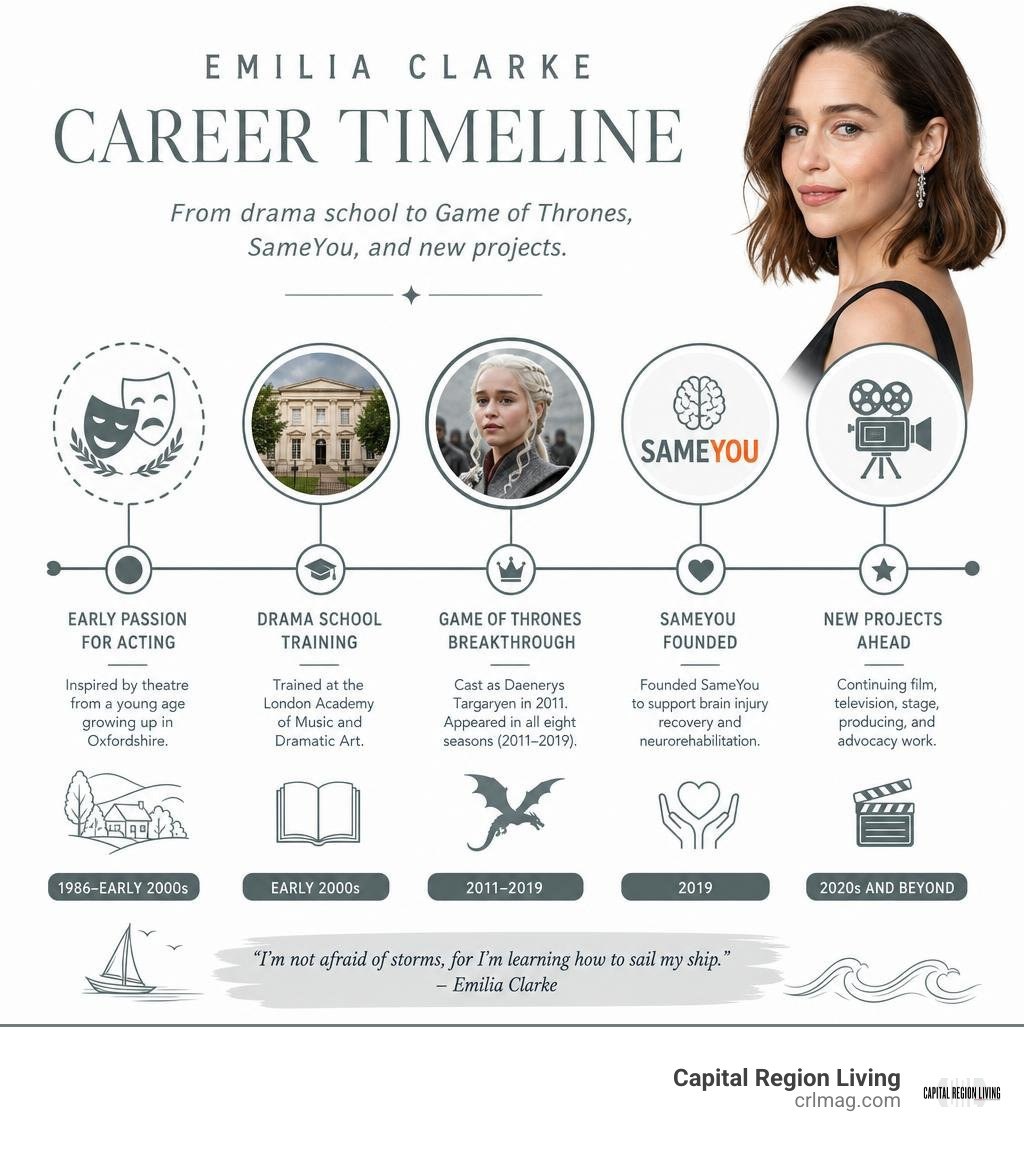
Emilia Isobel Euphemia Rose Clarke was born in London on October 23, 1986, and grew up in the scenic countryside of Oxfordshire. Raised in an environment steeped in both business acumen and theatrical wonder, Clarke developed a passion for the stage at a remarkably young age. Her father was a respected theatre sound designer, while her mother was a successful businesswoman and marketing executive. Visiting her father at work exposed Clarke to the magic behind the curtain, sparking an ambition to pursue performance full-time.
To understand Clarke’s path, it helps to review a Biography Of Emilia Clarke, which details how her family’s steadfast grounding shaped her resilience and creative discipline. Her father famously imparted the practical wisdom to “never trust anyone whose TV is bigger than their bookshelf,” an ethos prioritizing curiosity, reading, and self-awareness over passive entertainment.
Childhood in Oxfordshire and Indian Heritage
Clarke’s upbringing blended typical English school life at St Edward’s School in Oxford with a deeply personal family history. On her mother’s side, Clarke has Anglo-Indian heritage. Her maternal grandmother was born in India and had to wear makeup to hide her Indian ancestry to navigate societal prejudices of the era.
This hidden history left a profound mark on Clarke. When she was 16, Clarke traveled to India to scatter her grandmother’s ashes in the sacred waters of the Ganges River. She often attributes her family’s work ethic and tenacity to this heritage, viewing her ancestors as fighters. Her home life came with practical rules, too. Her mother gave her three non-negotiable household guidelines: don’t do drugs, don’t have sex, and never touch your eyebrows. The latter rule ended up preserving one of Clarke’s most expressive and recognizable acting trademarks.
Drama School Training and Early Television Roles
Determined to pursue acting professionally, Clarke applied to the renowned Drama Centre London. The school, known for rigorous classical instruction in Stanislavski-based character development and movement, pushed her to expand her technical capabilities. She graduated in 2009 alongside a cohort of ambitious British stage performers.
Like many young actors in the UK, breaking into screen acting required perseverance. Clarke juggled multiple service jobs—working as a bartender, server, and call center employee—while auditioning for commercials and guest spots. Her on-screen debut arrived in 2009 with a guest role on the long-running BBC One daytime medical soap opera Doctors, followed by a part in the Syfy television movie Triassic Attack in 2010. While modest, these early roles provided essential on-set camera experience right before her career changed overnight.
Global Stardom and the Game of Thrones Phenomenon
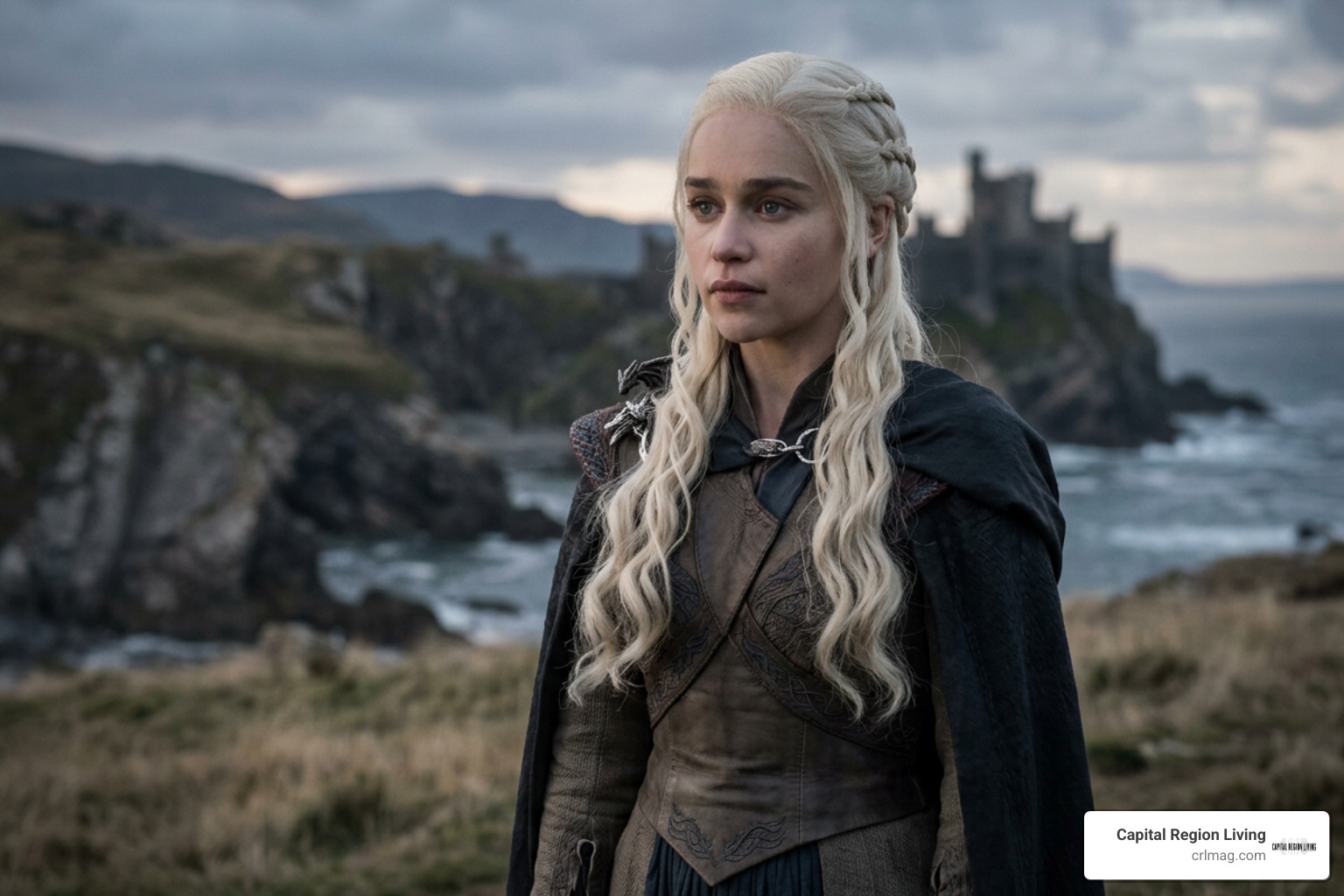
In 2010, Clarke received a life-altering call from her agent while working at a museum. HBO was recasting the lead role of Daenerys Targaryen for their high-budget fantasy series Game of Thrones. The original pilot episode had featured actress Tamzin Merchant in the role, but creative revisions led showrunners David Benioff and D.B. Weiss to reshoot the pilot and recast several central figures.
Clarke auditioned under immense pressure. During her audition for network executives, after delivering intense dramatic scenes, she broke the palpable tension in the room by spontaneously breaking into a robotic dance followed by the funky chicken dance. Her charm, vulnerability, and commanding presence won the room, landing her the role that would define global television for the next decade.
The Rise of Emilia Clarke as Daenerys Targaryen
Stepping onto the set in 2010, Clarke faced the formidable challenge of embodying a character who transforms from an exiled, timid pawn into the commanding “Mother of Dragons.” Daenerys Targaryen required delivering commanding speeches in invented languages like Dothraki and High Valyrian, while commanding scenes on horseback or in front of green screens.
The showrunners enforced strict fidelity to the written dialogue, prohibiting casual line adjustments and demanding exact cadence. Clarke rose to the challenge, delivering an electric performance that anchored the show’s worldwide popularity. Her nuanced delivery earned universal acclaim and four nominations for Emilia Clarke | Emmy Awards and Nominations | Television Academy, documenting her evolution from Supporting Actress nominee (2013, 2015, 2016) to Lead Actress nominee (2019).
Navigating High Salaries, On-Set Demands, and Critical Legacy
As Game of Thrones grew into the biggest television phenomenon on the planet, Clarke’s compensation mirrored the show’s massive success. During the peak seasons, core cast members negotiated unprecedented compensation, with Clarke earning between £1.2 million and £2 million per episode for the final run, though Clarke has candidly mentioned in retrospective interviews that online estimates can often feel distorted or exaggerated.
The role also brought difficult challenges. Early in production, Clarke navigated intense anxiety regarding explicit nude scenes at just 23 years old. As her experience grew, she developed strict boundaries regarding physical exposure on screen, turning down roles in films like Fifty Shades of Grey to avoid being pigeonholed.
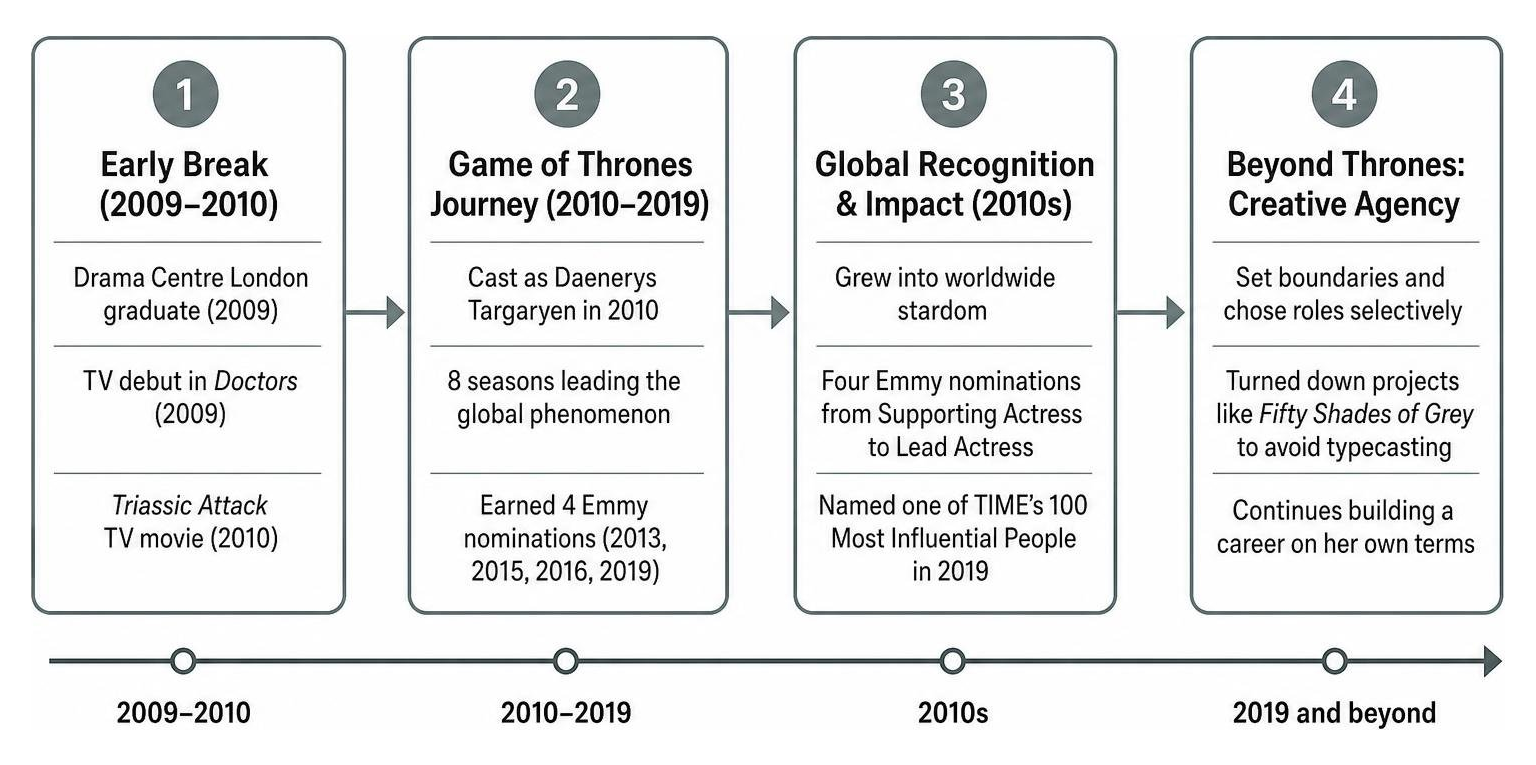
When the polarizing series finale aired in 2019, Clarke was open about her mixed emotions concerning the sudden, tragic fate of Daenerys Targaryen. Despite the public debate over the ending, her portrayal cemented her status as a cultural icon, leading Time magazine to name her one of the 100 most influential people in the world in 2019.
Overcoming Health Crises and Championing Neurorehabilitation
Beneath the glamour of global fame and award shows, Clarke was silently fighting a battle for survival. While filming the early seasons of Game of Thrones, she endured catastrophic neurological medical emergencies that nearly ended her career and her life.
Surviving these events required incredible resilience, reshaping her entire outlook on life, work, and community service.
Surviving Brain Aneurysms During Peak Stardom
In early 2011, shortly after wrapping production on the first season of Game of Thrones, Clarke collapsed at a gym in North London due to an excruciating headache. At the hospital, doctors diagnosed her with a subarachnoid hemorrhage—a life-threatening type of stroke caused by a ruptured brain aneurysm.
She underwent emergency minimally invasive surgery. During post-operative recovery, Clarke experienced temporary aphasia, a neurological condition caused by brain trauma that left her unable to recall her own name. For an actor whose entire life and vocation rely on memory and speech, this period caused profound terror.
Although the aphasia subsided and she returned to film Season 2, doctors discovered a second, smaller aneurysm on the other side of her brain. In 2013, while performing in Breakfast at Tiffany’s on Broadway in New York, a routine brain scan revealed that the second aneurysm had doubled in size. A preventative procedure failed, causing a major brain bleed that required immediate, invasive brain surgery through her skull.
The recovery was grueling. As detailed in news coverage showing how ‘Game of Thrones’ star Emilia Clarke feared dying ‘on live TV’ after suffering brain aneurysms | Fox News, Clarke endured intense anxiety, panic attacks, and fear that she would collapse or die during live press interviews. Miraculously, she retained full cognitive function, an outcome that places her in a very small minority of double-aneurysm survivors.
Neurorehabilitation Advocacy and Founding SameYou
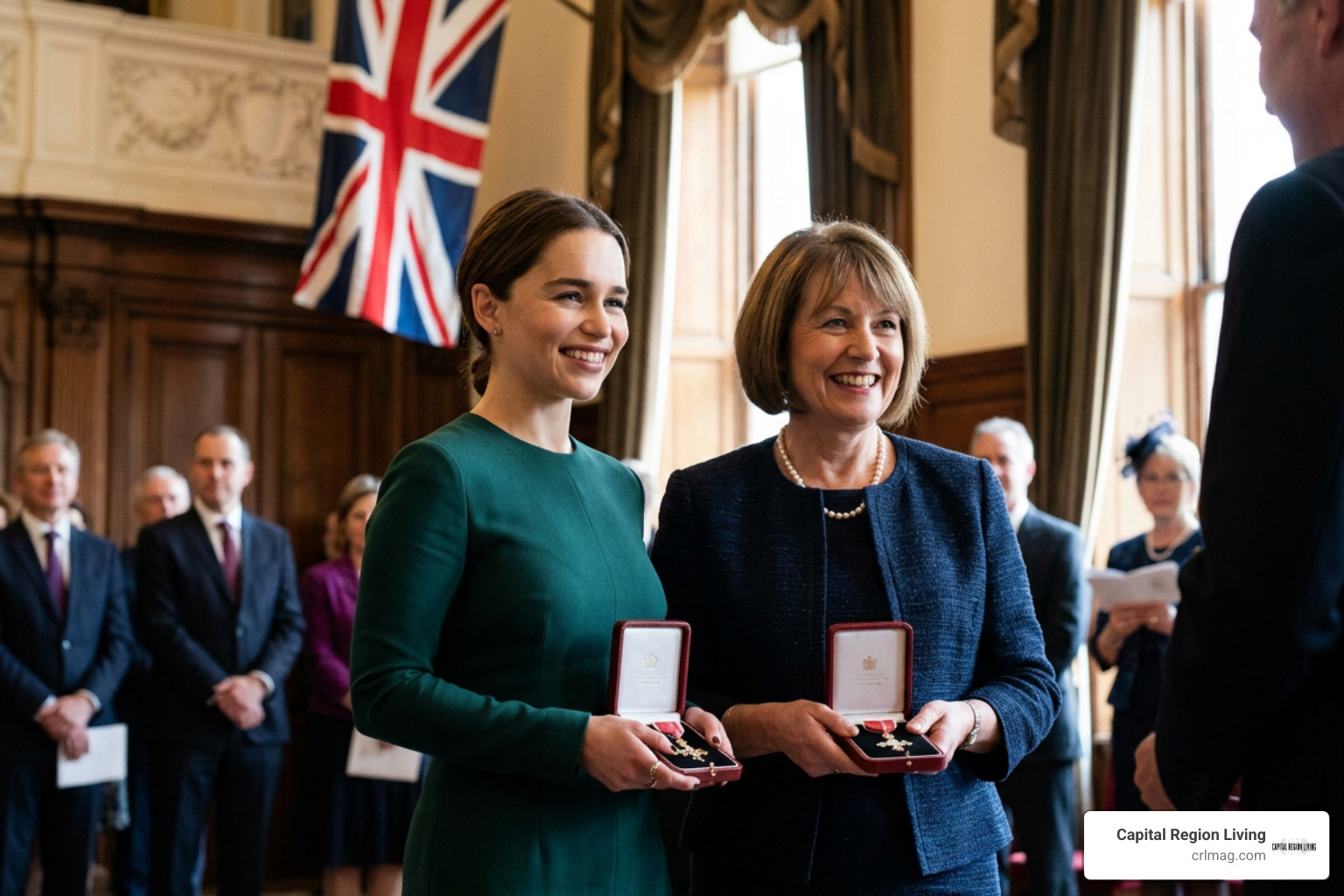
Transforming trauma into purpose, Clarke went public with her medical journey in a 2019 essay for The New Yorker. Alongside her mother, Jennie Clarke, she co-founded SameYou, a non-profit dedicated to improving neurorehabilitation access for young adults recovering from brain injuries and strokes.
Clarke realized that while acute emergency care saves lives in hospitals, post-discharge support—including mental health services, speech therapy, and peer support—was severely lacking. In a memorable feature detailing Emilia Clarke on ‘Game of Thrones’ Salary, Surviving Brain Hemorrhages, she reflected on the survivor’s guilt she felt and her determination to ensure other survivors do not have to walk the road to recovery alone.
Key advocacy initiatives led by Clarke and SameYou include:
- Global Fundraising Campaigns: Mobilizing communities worldwide, including raising over £200,000 in a single charity livestream and inspiring the grassroots “Justice for Daenerys” fan campaign that raised over £83,000.
- Clinical Rehabilitation Programs: Partnering with premier medical institutions in the UK and US to establish specialized virtual clinics and physical therapy programs for brain injury recovery.
- Nursing Ambassadorship: Becoming the sole ambassador for the Royal College of Nursing (RCN) in April 2018, championing healthcare workers and patient care standards.
- Royal Recognition: In the 2024 New Year Honours, Emilia and Jennie Clarke were awarded the MBE (Member of the Order of the British Empire) by Prince William at Windsor Castle for their life-saving work with SameYou.
Evolving Career: Blockbuster Lessons, West End Stage, and Indie Films
Following her breakout role on television, Clarke expanded into major studio feature films, classic theatre, and independent passion projects.
Rather than sticking to predictable period dramas—a path often referred to as “bonnet duty” for British actors—Clarke actively explored action, romantic comedy, science fiction, and classic dramatic literature.
| Project Title | Year | Role / Medium | Global Box Office / Format | Notable Takeaway |
|---|---|---|---|---|
| Terminator Genisys | 2015 | Sarah Connor (Film) | $440+ Million | High-intensity physical combat training alongside Arnold Schwarzenegger |
| Me Before You | 2016 | Lou Clark (Film) | $200+ Million | Commercial hit proving Clarke’s magnetic appeal in romantic drama ($20M budget) |
| Solo: A Star Wars Story | 2018 | Qi’ra (Film) | $393 Million | Expanding into the Star Wars universe; character-driven nuance |
| Last Christmas | 2019 | Kate (Film) | $121+ Million | Holiday romantic comedy written by Emma Thompson, showcasing comedic timing |
| The Seagull | 2020/2022 | Nina Mikhailovna (West End) | Live Stage Production | West End theatrical triumph earning widespread critical acclaim |
| The Pod Generation | 2023 | Rachel (Film & Exec Producer) | Independent Sci-Fi Satire | Stepping into executive producing alongside Chiwetel Ejiofor |
| Secret Invasion | 2023 | G’iah (TV Mini-Series) | Marvel / Disney+ | Exploring action and high-stakes superhero genre worldbuilding |
Major Franchises and Lessons in Creative Detachment
Clarke stepped into some of cinema’s biggest intellectual properties, playing Sarah Connor in Terminator Genisys (2015), Qi’ra in Solo: A Star Wars Story (2018), and G’iah in Marvel Studios’ Secret Invasion (2023). While these projects brought massive global exposure and impressive box office numbers (such as Terminator Genisys grossing over $440 million), their reception from critics and franchise fandoms was sometimes mixed.
From these high-profile releases, Clarke learned a valuable lesson in creative detachment. When entering massive, established franchises, an actor cannot take box office totals or divided fan reception personally. She realized that her true job as an actor is to focus on craft, preparation, and collaboration during filming, letting go of the outcome once production wraps.
Romantic Leads, Independent Cinema, and Theatre
Away from explosions and massive CGI sets, Clarke discovered consistent critical and commercial success in character-driven narratives. In 2016, she starred as Louisa Clark in the adaptation of Jojo Moyes’ novel Me Before You, an emotional powerhouse that earned over $200 million globally against a modest $20 million budget. She followed this with the festive hit Last Christmas (2019), demonstrating her natural comedic charm.
Clarke also returned to her theatrical roots. After making her Broadway debut as Holly Golightly in Breakfast at Tiffany’s in 2013, she tackled classic Russian drama on London’s West End, portraying Nina Mikhailovna in Anton Chekhov’s The Seagull. Directed by Jamie Lloyd, the minimalist production opened in 2020, was suspended due to global pandemic lockdowns, and returned triumphantly in 2022. Critics lauded her performance as magnetic and deeply charismatic.
Expanding her artistic boundaries even further, Clarke co-created and wrote the three-issue comic book miniseries M.O.M.: Mother of Madness for Image Comics in 2021, presenting a funny, feminist superhero story centered on motherhood and self-acceptance.
Creative Growth, Upcoming Projects, and Redefining Success
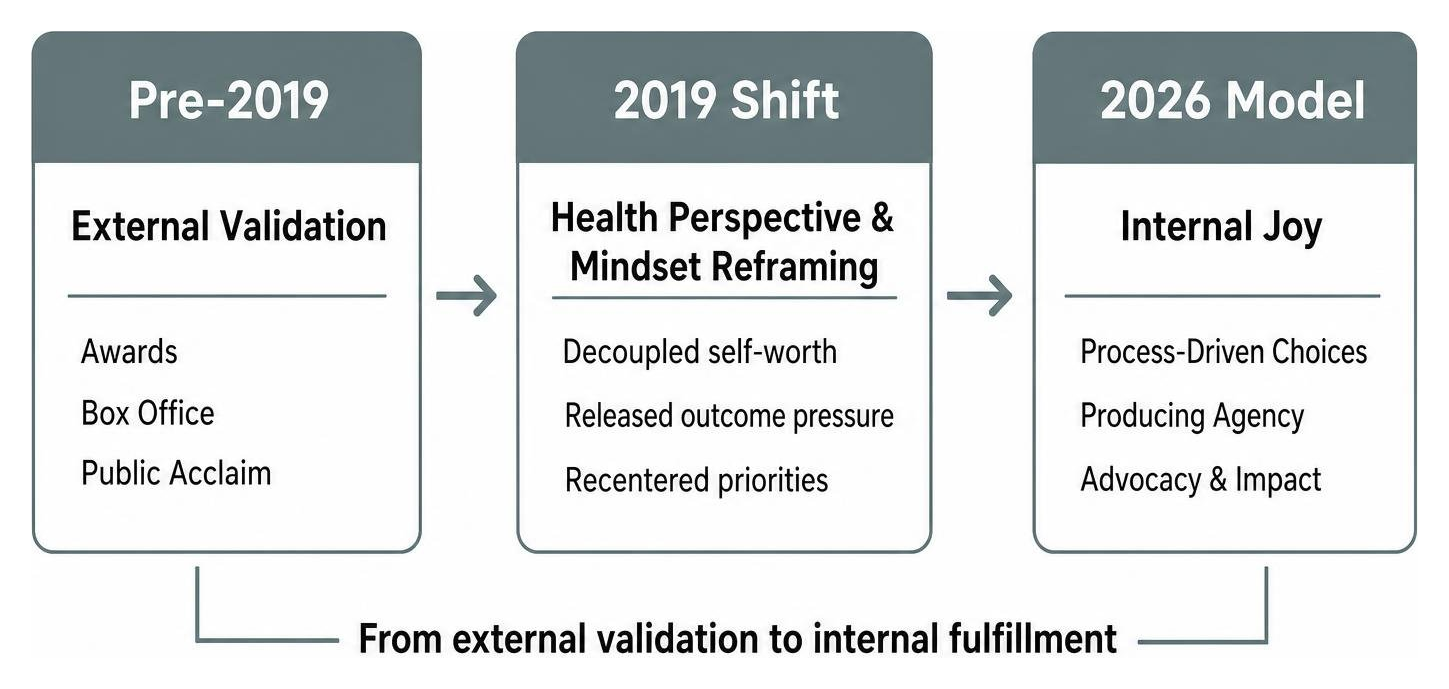
The morning after the 2019 Emmy Awards, Clarke made a conscious decision to reframe how she measured personal and professional fulfillment. Having experienced both the height of award season anticipation and the pressure of public scrutiny, she decoupled her self-worth from trophies, box office numbers, and social media validation.
Instead, she shifted toward choosing projects based entirely on the artistic joy of the process, the strength of the script, and the creative integrity of the team.
Upcoming Projects: Criminal, Ponies, and Next Life
Clarke’s slate reflects this deliberate shift toward rich, character-focused storytelling across various genres. For fans tracking what is new, an up-to-date look at Emilia Clarke – Age, Height, Movies, Husband and Net Worth 2026 – glasgowwire.uk highlights her transition into edgy independent projects and high-concept episodic television:
- Criminal: An adaptation of Ed Brubaker and Sean Phillips’ acclaimed graphic novel series, where Clarke takes on the role of Mallory, a sharp, daring character operating within a gritty criminal underworld.
- Ponies: A Cold War espionage thriller series set in 1970s Moscow, following two unassuming embassy secretaries whose lives are upended when their husbands are killed under mysterious circumstances, pulling them into undercover intelligence work.
- Next Life: An intimate indie drama directed by Drake Doremus, an experience Clarke cherished so deeply that she and the director commemorated the production with matching ivy tattoos.
Creative Control and Executive Production by Emilia Clarke
Beyond appearing on camera, Clarke has expanded into producing to ensure greater artistic control. By serving as an executive producer on projects like The Pod Generation and upcoming screen adaptations, she helps shape scripts, casting, and overall creative direction from the earliest stages.
She has also used her platform to champion fair and considerate workplace standards across the entertainment industry. Clarke advocates for compassionate set environments, clear boundaries for young actors, and psychological support on high-intensity productions. Balancing acting with executive producing and philanthropic leadership with SameYou, Clarke has built a sustainable, fulfilling career on her own terms.
Frequently Asked Questions
For a quick reference on personal trivia, net worth estimates, and professional milestones, consult an online Emilia Clarke Wiki, Bio, Networth, BF, Husband, Family & More – DWB to explore verified facts about her life.
What is the SameYou charity and why was it founded?
SameYou is a non-profit organization established in 2019 by Emilia Clarke and her mother, Jennie Clarke. Emilia founded the charity after surviving two life-threatening brain aneurysms (subarachnoid hemorrhages) in 2011 and 2013.
The organization focuses on increasing access to neurological rehabilitation for young adults recovering from brain injuries and strokes. SameYou funds clinical innovations, provides mental health resources, and trains healthcare professionals to address the emotional recovery and survivor’s guilt that often accompany brain trauma.
Did Emilia Clarke win an Emmy for Game of Thrones?
While Emilia Clarke did not win a Primetime Emmy Award, she earned four prestigious nominations from the Television Academy for her portrayal of Daenerys Targaryen:
- 2013: Outstanding Supporting Actress in a Drama Series
- 2015: Outstanding Supporting Actress in a Drama Series
- 2016: Outstanding Supporting Actress in a Drama Series
- 2019: Outstanding Lead Actress in a Drama Series
Her performances across all eight seasons remain widely celebrated by critics and fans alike as one of the definitive acting achievements in television history.
What are Emilia Clarke’s major projects in 2026?
In the current entertainment landscape, Clarke is focusing on diverse, high-concept roles across streaming, television, and independent cinema. Her primary projects include:
- Starring as Mallory in the graphic novel adaptation series Criminal.
- Leading the Cold War espionage series Ponies.
- The release and festival circuit for the indie drama Next Life, directed by Drake Doremus.
- Continuing her work as an executive producer on character-driven independent film and television properties.
Conclusion
Emilia Clarke’s journey is defined by remarkable artistic talent, professional discipline, and personal courage. From her early training at Drama Centre London to becoming a global icon on Game of Thrones, she has consistently challenged herself across genres and mediums. Her determination in overcoming life-threatening brain aneurysms—and subsequently building SameYou into a globally recognized charity—demonstrates a commitment to using her platform for meaningful change.
By redefining success around creative joy, taking on dynamic projects like Criminal and Ponies, and advocating for better healthcare access, Clarke shows what it means to lead a purposeful and balanced career in the arts.
Whether you are catching up on classic cinema or discovering new cultural events in our local area, we invite you to explore our Capital Region lifestyle directory to find regional arts venues, community programs, and local stories right here in Upstate New York.