Why Linen Pants Are a Warm-Weather Essential
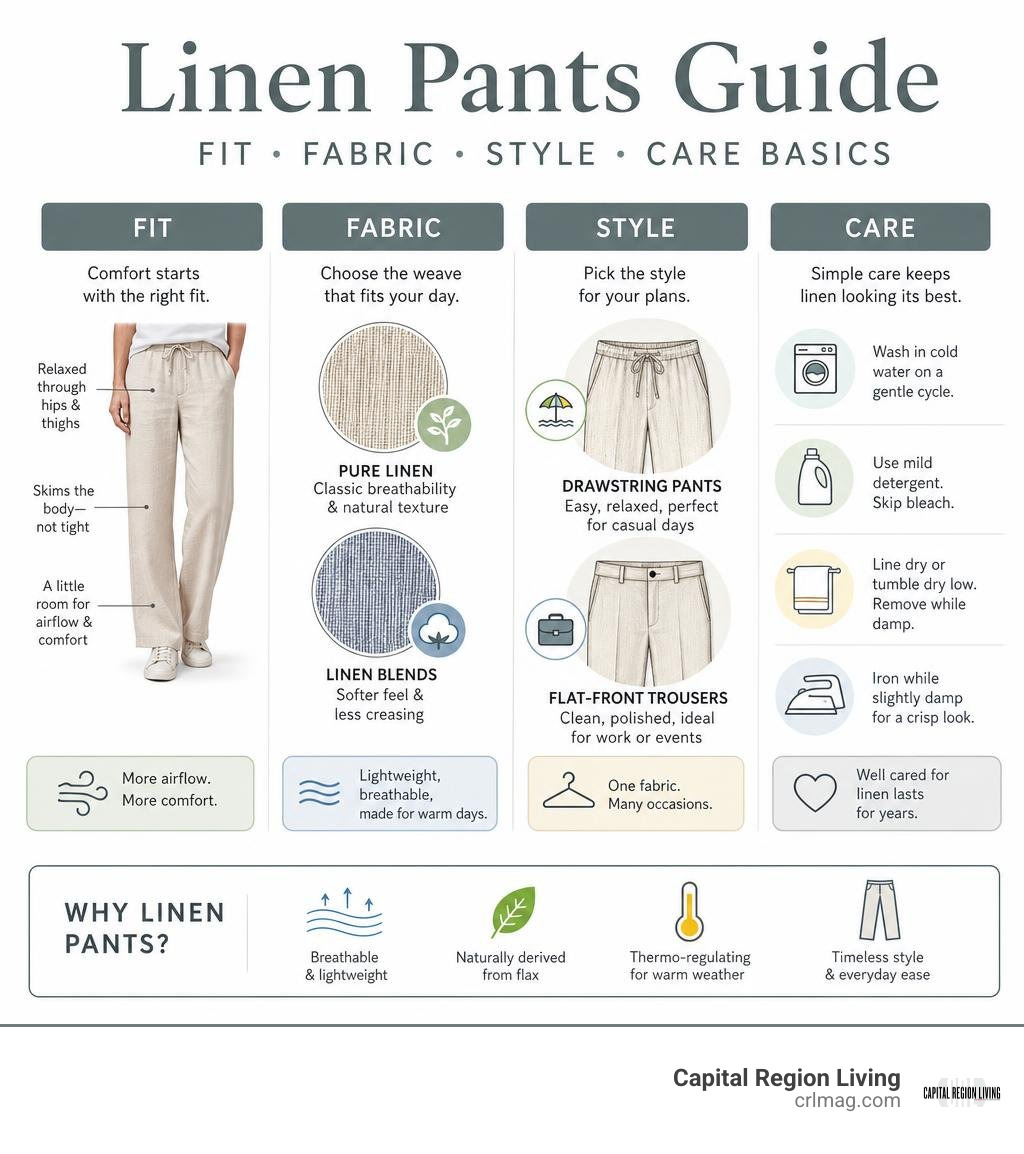
Linen pants are a smart choice for hot, humid days because their flax fibers allow air to move and help the fabric feel light against the skin. Choose a relaxed fit through the hips and thighs, then pick the style based on where you will wear them: drawstring pants for casual comfort, or flat-front trousers for a cleaner office or event look.
The best pair does not need to look oversized. Linen has little natural stretch, so it should skim your body rather than pull at the seat, pockets, or seams. A little room is the point: it improves airflow and makes walking, dining outdoors, traveling, and summer events more comfortable.
Pure linen offers the most classic breathable feel and natural texture, while linen blends can feel softer and crease less. Either can work well for Capital Region summers, from a weekend by the water to a warm-weather workday.
This guide covers how to find the right fabric, fit, length, and style – plus how to wash linen pants without shrinking or misshaping them.
Choosing the Right Fabric: Pure Flax vs. Blends
Linen is woven from the cellulose fibers of the flax plant (Linum usitatissimum), a resilient crop that produces lightweight, highly absorbent, and thermo-regulating textiles. When shopping for bottoms, fabric density—measured in grams per square meter (GSM)—determines how a pair drapes, breathes, and wears over time.
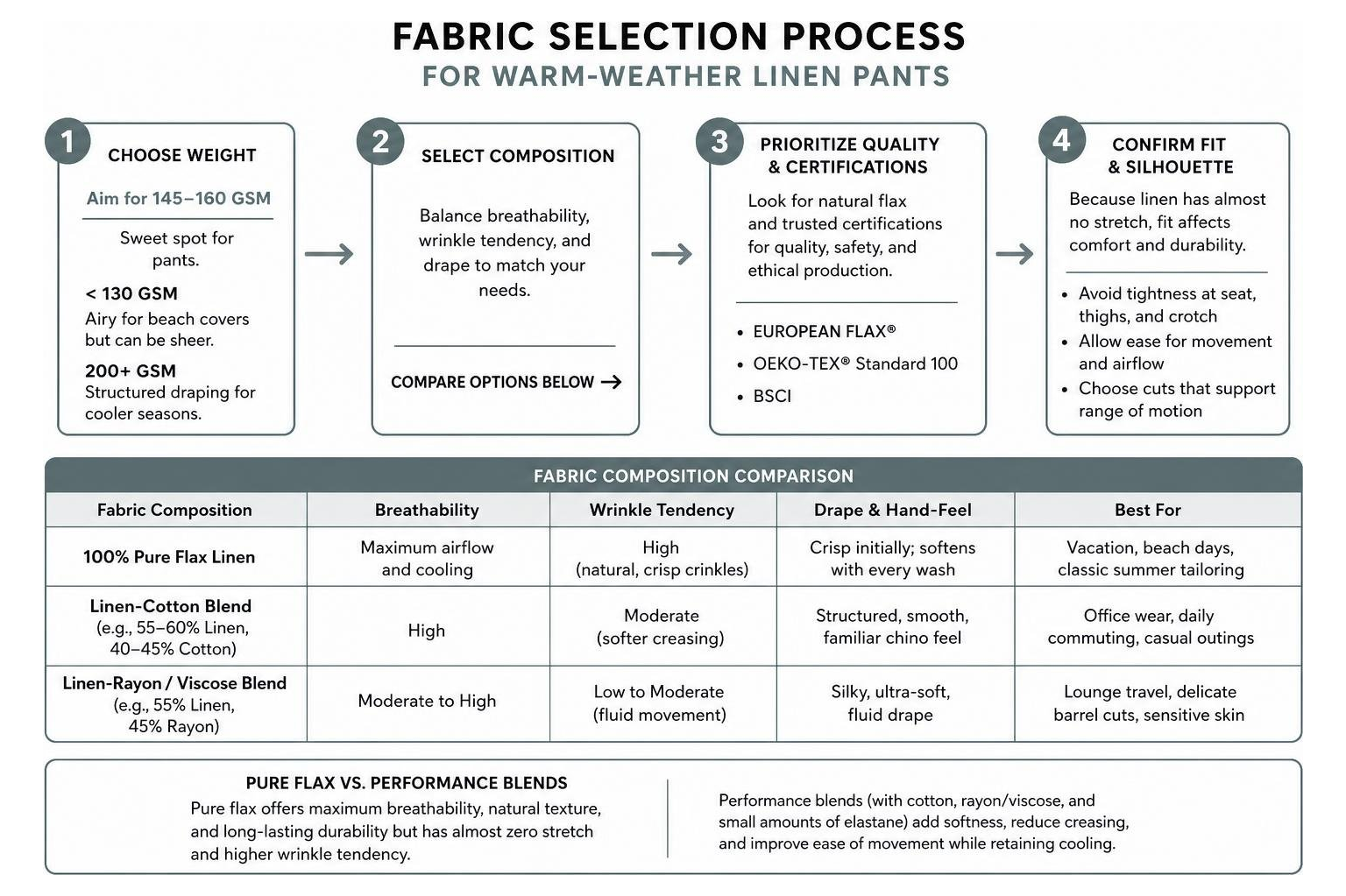
Medium-weight weaves falling between 145 and 160 GSM hit the sweet spot for pants. This weight ensures that the fabric maintains enough structural integrity to resist premature seam breakdown while preventing daylight transparency and allowing air to pass through freely. Lightweight weaves below 130 GSM are airy for beach covers but can be sheer, while heavier weights (around 200+ GSM) deliver structured draping suitable for cool transition seasons.
| Fabric Composition | Breathability | Wrinkle Tendency | Drape & Hand-Feel | Best For |
|---|---|---|---|---|
| 100% Pure Flax Linen | Maximum airflow and cooling | High (natural, crisp crinkles) | Crisp initially; softens with every wash | Vacation, beach days, classic summer tailoring |
| Linen-Cotton Blend (e.g., 55–60% Linen, 40–45% Cotton) | High | Moderate (softer creasing) | Structured, smooth, familiar chino feel | Office wear, daily commuting, casual outings |
| Linen-Rayon / Viscose Blend (e.g., 55% Linen, 45% Rayon) | Moderate to High | Low to Moderate (fluid movement) | Silky, ultra-soft, fluid drape | Lounge travel, delicate barrel cuts, sensitive skin |
100% Pure Flax vs. Performance Blends
Pure flax linen remains celebrated for its signature “slub”—the subtle, irregular thick-and-thin yarns across the weave that give natural linen its tactile richness. Long-staple European flax fibers are strong, hypoallergenic, and antibacterial. Unlike synthetic materials that trap humidity, unblended linen draws moisture away from the skin and evaporates it rapidly into the surrounding air.
However, pure flax has almost zero natural elasticity. If you prefer pants that bend effortlessly during travel or seated office work, performance blends offer distinct practical advantages.
Options like the Slim Linen-Cotton Traveler Pant | Banana Republic combine 60% flax with 39% cotton and 1% elastane sourced from Italy’s Olimpias mill. This hybrid construction softens the garment against sensitive skin, provides subtle mechanical stretch, and prevents deep, stubborn creasing while retaining cooling performance.
Similarly, combining flax with rayon or viscose creates a fluid, flowing drape that minimizes harsh creases and eliminates any initial fiber stiffness.
Sustainable Sourcing and Textile Certifications
Flax is naturally among the most eco-friendly agricultural crops in modern garment production. Unlike conventional cotton, which relies heavily on artificial irrigation and synthetic pesticides, European flax is primarily a rain-fed crop cultivated under sustainable agricultural guidelines.
When evaluating linen quality, specific textile certifications offer peace of mind:
- EUROPEAN FLAX®: Guarantees that the underlying flax fibers were grown in Western Europe through non-irrigated agriculture, with zero waste across the harvesting process.
- OEKO-TEX® Standard 100: Verifies that every component of the finished garment—from the woven yarns to the buttons, zippers, and dyes—has been independently tested and proven free from harmful levels of toxic chemicals.
- BSCI (Business Social Compliance Initiative): Ensures that the manufacturing facilities adhere to strict social compliance standards, safe working conditions, and fair labor practices.
Brands utilizing certified materials, such as the 100% European Linen Wide Leg Pants in Sky Blue Mariner Stripe, offer traceable sustainability alongside soft, garment-washed fabrics.
Key Silhouette and Fit Considerations for Linen Pants

Because woven flax lacks synthetic stretch, silhouette construction directly impacts both comfort and garment lifespan. Pants that fit too snugly across the seat, thighs, or crotch place excessive tension on the seams, leading to premature thinning or seam blowouts.
A relaxed cut allows warm air to escape while creating continuous micro-ventilation as you walk. When trying on linen bottoms, prioritize ease across the hip and seat measurements rather than focusing solely on waistband sizing.
Popular Styles of Linen Pants for Women
Women’s linen silhouettes range from classic vacation lounge cuts to tailored workwear:
- Wide-Leg Trousers: Characterized by a high-rise waist and a generous, flowing leg opening, this style drapes smoothly and creates an elongated silhouette. Pairs like the 100% Linen Classic Pants LYON – LINTICO feature 100% European linen in a 145–160 GSM density with deep functional pockets and an adjustable waistband.
- Lantern and Barrel Cuts: Designed with a high rise that widens subtly through the calf and tapers gently back in at the ankle hem. This shape offers dramatic structural volume without dragging on the ground, making it an ideal choice for petite frames.
- Cropped Straight-Leg: Hitting 2 to 3 inches above the ankle bone, this cut keeps hems away from street dust and highlights slide sandals, mules, or low-top white sneakers.
- Smocked Waistband Pull-Ons: Featuring a wide, elasticized waistband that sits flat across the midsection without pinching, making them a practical staple for warm-weather road trips and flights.
Essential Cuts of Linen Pants for Men
For men, modern linen tailoring balances breezy fabric with structured profiles:
- Classic Straight-Leg: A relaxed, time-tested cut that falls evenly from the hip through the leg opening, ensuring unrestricted mobility and heat dissipation.
- Modern Slim-Tapered: Designed with a mid-rise (around an 11-inch front rise) and a gentle taper down to a clean 14- to 15-inch leg opening. This cut delivers a contemporary profile suitable for both casual tees and button-down shirts.
- Five-Pocket Traveler Cuts: Merging the pocket configuration of traditional jeans with a linen-cotton blend, offering a versatile pant that transitions easily from daytime travel to evening dinners.
- Heavyweight Linen Trousers: Cut from denser, structured linen that holds a sharp press and subtle front crease, making them a reliable alternative to wool dress slacks during high-summer formal occasions.
How to Style Linen Pants for Every Occasion

Linen pants adapt easily across diverse dress codes, pairing effortlessly with crisp cottons, soft knitwear, and polished leather accessories.
Drawstring Comfort vs. Flat-Front Tailoring
The choice between a drawstring waist and a flat-front trouser largely dictates where you can wear the piece:
- Drawstring Waists: Feature an exposed cord and full elastic banding. They maximize personal comfort, adjust easily to body shifts throughout the day, and pair well with casual tees, untucked linen button-ups, and swimwear.
- Flat-Front Trousers: Feature a clean waistband with belt loops, a zip fly, and concealed clasp or button closures. They provide the clean visual lines required for business-casual offices, outdoor banquets, and country club settings.
- Hybrid Waistbands: The modern middle ground—featuring a clean, flat waistband across the front with hidden elastic across the back. This configuration maintains an elevated look when shirts are tucked in while delivering pull-on comfort.
Dressing for the Beach, Office, and Formal Events
- Casual Beach Days & Resort Lounging: Pair relaxed, light-toned drawstring pants with an open short-sleeve camp shirt over a ribbed tank top. Complete the outfit with leather slide sandals or espadrilles and woven accessories.
- Warm-Weather Office Attire: Select flat-front straight-leg or wide-leg trousers in navy, olive, or charcoal. Pair with a tucked-in supima cotton t-shirt or tailored Oxford shirt, layered underneath an unlined cotton-linen blazer. Finish with suede loafers or minimalist leather mules.
- Summer Weddings & Formal Gatherings: Choose tailored, high-waisted linen trousers in cream, stone, or sage green. Pair them with a matching linen vest or jacket, a crisp white dress shirt, and polished dress shoes. Natural wrinkles develop with movement throughout the event and should be appreciated as an authentic characteristic of fine linen suiting.
Essential Care and Maintenance: Washing, Drying, and Ironing
Proper laundering preserves the structural strength of flax fibers and naturally softens the fabric with every wash cycle.
Washing and Shrinkage Prevention
Natural flax fibers will contract and shrink when exposed to hot water and high mechanical dryer heat. Follow these laundering best practices:
- Water Temperature: Always wash linen in cold or lukewarm water (never hot) on a gentle, low-spin cycle to prevent fiber breakage.
- Detergent Selection: Use mild liquid detergents free from synthetic brighteners. Avoid chlorine bleach, which weakens cellulose fibers and causes yellowing; use oxygen- or peroxide-based stain removers for spot cleaning instead.
- Drying Methods: The safest drying method is line drying in the shade or laying the trousers flat on a drying rack. Direct, intense sunlight can cause vibrant dye tones to fade prematurely.
- Machine Drying Tips: If using a machine dryer, set it to the lowest heat setting (or air fluff) and add 100% wool dryer balls to reduce static and soften the fabric. Remove the pants while they are still slightly damp to prevent stubborn, deep-set wrinkles from baking into the cloth.
Wrinkle Management and Steaming Hacks
While natural creasing is a defining characteristic of pure linen, deep creases can be smoothed using these straightforward methods:
- Damp Ironing: For a crisp, polished appearance on flat-front trousers, iron the pants inside-out on a medium-warm setting while the fabric remains slightly damp. Keep the iron gliding smoothly to prevent scorching.
- Garment Steaming: For relaxed drawstring styles, hang the pants and glide a handheld garment steamer 1 inch away from the fabric. The steam relaxes the flax fibers instantly, leaving a soft, natural texture.
- The Dryer Ice-Cube Hack: If your pants are dry and wrinkled before heading out, toss them into the dryer on low heat with two ice cubes for 5 to 8 minutes. The melting ice creates an improvised steam cycle that releases surface wrinkles without an ironing board.
- Luggage Packing Technique: When packing linen for summer travel, roll the trousers tightly instead of folding them. Rolling saves suitcase space and prevents hard horizontal crease lines across the legs.
- Storage: Hang linen trousers using wide, padded wooden hangers to maintain waistband shape, or fold them loosely in breathable cotton storage bins in a dry closet.
Frequently Asked Questions About Linen Trousers
Are white linen trousers see-through in sunlight?
Lightweight, optic-white linen can appear semi-sheer in direct outdoor daylight due to the open weave of natural flax. To ensure full opacity:
- Choose trousers crafted from medium-weight linen (150+ GSM) with integrated pocket linings.
- Wear undergarments that match your skin tone rather than white undergarments, as white underwear creates visible contrast beneath light fabrics.
- Opt for off-white, oatmeal, or cream shades, which reflect light more evenly than bright optic white.
Can linen trousers be tailored or hemmed?
Yes, linen trousers can be hemmed and altered by any professional tailor. Because woven linen fibers may contract slightly after the first wash, always launder your pants according to their care instructions before taking them in for alterations. When pinning the hem, wear the exact footwear you intend to pair with the pants to achieve a clean break over the shoe.
Are linen trousers supposed to fit loose or baggy?
Linen trousers are deliberately designed with a relaxed fit through the hip, seat, and thigh to encourage continuous airflow and keep you cool. They should skim your silhouette comfortably without pulling across the pockets or fabric seams. While modern styles offer slim-tapered or wide-leg silhouettes, the fabric should never fit skin-tight like stretch denim.
Conclusion
Linen pants represent an essential, enduring foundation for warm-weather dressing. By understanding fabric weights, choosing cuts that provide natural mobility, and following simple cold-water laundering habits, you can build a versatile rotation of bottoms that softens and looks better with every passing summer.
Whether you are strolling alongside the Hudson, browsing seasonal markets, or planning an outdoor dinner, exploring our local Capital Region business directory is a great way to discover neighborhood boutiques and alteration specialists across our community.