Photography by Jess McNavich
There are some calls you get in life that you just have to say yes to.
For Jean Leonard, one such call came 14 years ago, when Philip Morris—the vivacious, larger-than-life CEO of Proctors Theatre—asked if she would be willing to take on a part-time job.
Leonard and Morris shared a dedication to the arts in the Capital Region, having sung together as part of the Albany Pro Musica choral ensemble. On that fateful call, Leonard had no way of knowing that agreeing to help out a friend would lead to her becoming the president of Proctors Collaborative—the entity behind Proctors in Schenectady, Capital Repertory Theatre in Albany, and Universal Preservation Hall in Saratoga—in 2024.
“The job became far less temporary and far less part-time,” she says warmly.
Leonard’s word choice is only fitting: “Temporary” and “Proctors” simply don’t belong in the same sentence.
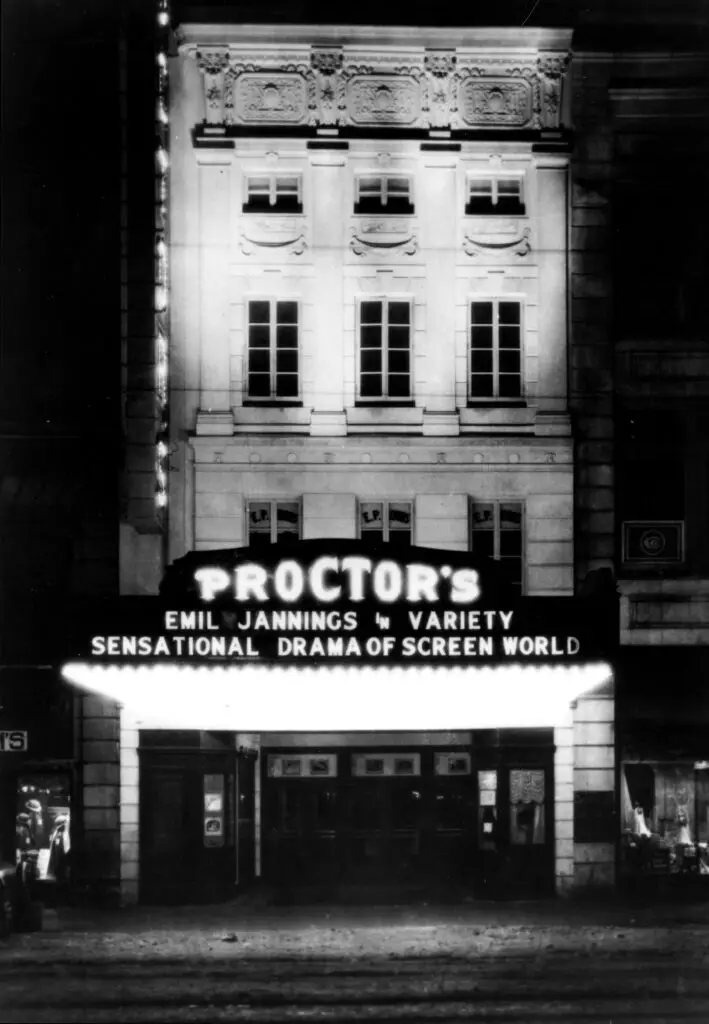
Originally built in 1926 as a vaudeville theater, Proctors is celebrating its 100th birthday this year, making it one of the oldest theaters in our region. “You can feel history when you stand on the main stage,” says Leonard. “You have a real sense of the fact that you’re standing in a place that many have stood. When you walk backstage, when you walk around in the dressing rooms—you know those are old doors and old spaces, and you know you’re in a place where artistic expression has been a reality for a very long time.”
When Proctors first opened its doors, it did so with full pomp and circumstance: Designed by architect Thomas Lamb in the Italian Baroque tradition, the theater held 7,000 people on its opening day on December 27, 1926. The feature film was Stranded in Paris, and a matinee cost only 35 cents. As the story goes, patrons were so awestruck by the lavish architecture and surroundings that it was almost overwhelming.
In those early years, the theater played host to vaudeville shows and silent films. When talkies hit the scene, Proctors evolved: F.F. Proctor, the theater’s first owner and namesake, built a sound system for the venue. What set the theater apart, even then, was that Proctors didn’t merely react and adapt to the innovations of others; rather, it made its own leaps of innovation, too, revolutionizing what a performance space could be. On May 22, 1930, Proctors hosted an early demonstration of live television, thanks to the help of one of General Electric’s most prolific engineers, Dr. Ernst F.W. Alexanderson. With a live audience watching in the theater, an orchestra was led by the image of a conductor on a seven-foot screen. Meanwhile, he was actually conducting from the GE lab across town.
Not immune to the changing tides of history, the theater did suffer in the wake of World War II. As television became commonplace and Americans gravitated towards suburbia, Proctors struggled to compete. By the 1970s, the theater had fallen into disrepair and was closed due to nonpayment of taxes.
What saved Proctors from the wrecking ball was the Schenectady community. Concerned citizens operating as the Arts Center & Theatre of Schenectady (ACTS) banded together to save the theater, painstakingly working to repair the property and raise funds for its operation. Thanks to their efforts, as well as approximately $50,000 in federal and city funding, Proctors reopened its doors in 1979.
Just over 20 years later, Proctors was still in business, but the city surrounding it was crumbling. Mass layoffs at General Electric helped turn Schenectady into a ghost of its former self; locals recall being able to walk down the middle of State Street because there were no cars. Then, Philip Morris arrived.
While the board that brought Morris on was, at the time, simply focused on keeping the theater running and finding a new CEO, Morris’ creative, big-picture thinking cast a far wider net for what was possible.
The child of Greek immigrants, Morris inherited a reverence for history and community from his father. Growing up, he was part of a small group that was opposed to their local church’s decision to leave downtown New Haven for suburbia.
“That thinking had been part of my operating,” he says. When asked to say more on the importance of a downtown, his voice becomes animated. “Now that’s a long story,” he says.
“Downtowns are dense,” he continues. “That density is good for the planet. Downtowns are social. Downtowns are where people convene and be.” Suburbia, he acknowledges, has changed some of that, though not necessarily for the better. “Downtowns are where life happens.”
When Morris was hired as the new CEO of Proctors, Schenectady was no longer feeling like a place where life happens. He recognized early on that the theater shouldn’t be thought of as separate from the downtown to which it belonged. For Morris, revitalizing Proctors and revitalizing Schenectady were one and the same. A year after he came on board, Proctors embarked on a sweeping $42 million expansion and renovation project that enlarged the stage house; created the GE Theatre; turned the former Carl Company department store into a box office, café, and administrative spaces; and, oh yeah, built a power plant.
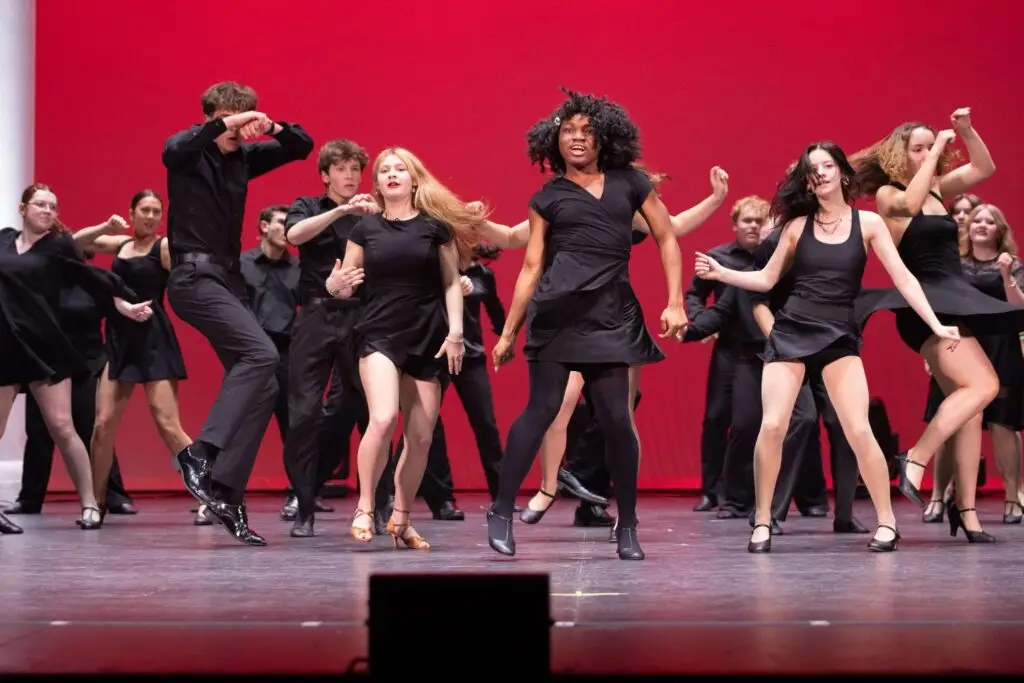
“When Schenectady was at its worst and emptiest, and we were doing our redevelopment, we made the decision to put in a power plant that would be available to other businesses in our neighborhood,” Morris says. “The decision was driven by a sense that we’re only as good as our neighborhood. Get our neighborhood’s utility costs under control, and people will renovate those buildings. Which they have done.” At press time, Proctors was the only performing arts center in the country to heat and cool itself as well some 20 surrounding businesses.
“It was a wild idea that seemed impossible,” Morris says.” “But I had board members who knew that the town needed something wild. As I processed it with the board, and they looked at it all, they went, ‘We have to do this, it’s the right thing to do.’ And that notion of the ‘right thing to do’ has kind of driven us for a long time.”
Several years later, when two other Capital Region performing arts venues needed help, Proctors once again stepped up to the plate.
“The REP needed a different structure in order to continue, and, as I hear the story told, we couldn’t quite imagine the Capital Region without a professional theater,” Leonard says of Albany’s Capital Repertory Theatre. “To answer yes to that request for support was easy. Of course we’re going to help make sure professional theater remains alive and well in the Capital District.”
With Universal Preservation Hall (UPH), the story was very much the same.
“When they called from Saratoga, and said, ‘We think it’s really important to have a downtown performing arts center in Saratoga, and we think we need help,’ our answer was, ‘Yes, we know how to do that,’” Leonard says.
UPH opened its doors in late February 2020, mere days before the COVID pandemic shut down the world. Or, rather, the world minus Proctors. While every other orchestra in America was put on pause due to lockdown restrictions, the Empire State Youth Orchestra was able to continue rehearsing at Proctors, which opened the entire building to the group. Kids were able to practice their instruments while also practicing social distancing.
And when Proctors got word that there were children in Schenectady without access to internet for remote learning, Morris opened the doors to them, too. “Kids were separated by a table each,” he says. “They were 10 feet apart, but they could do their remote learning with our Wi-Fi. We had it. Why not use it?”
It’s initiatives like these that fill the Proctors team with the greatest sense of pride. As Leonard puts it, it’s cool to say that you’ve brought Hamilton to the Capital Region (twice!). But it’s the quieter moments most people don’t hear about that matter most. For example, this past year, Proctors put on its first-ever sensory-friendly performance for the community.
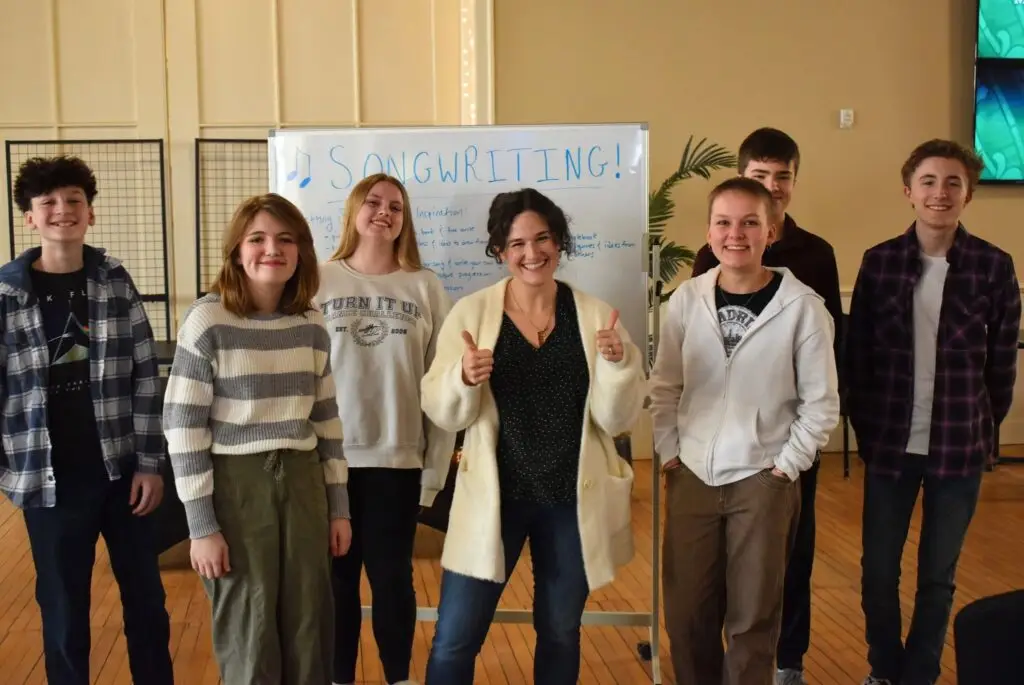
“That’s 1,100 people that were really grateful for an opportunity to bring a child or an adult that had sensory needs to come and see a show,” says Leonard. “Many of them for the first time.”
As the Proctors team looks towards the future, answering the calls of community needs will remain a guiding compass. To continue to make this possible, Proctors has launched a $35 million endowment campaign that will provide scholarships for 10,000 students per year to attend educational programs, subsidize community resource programs, fund diverse arts programming, and support the ongoing maintenance and preservation of the historic theater.
“Our job is to continue to pay attention to arts and culture and community needs, and meet them,” says Leonard. “The endowment component is one way we set ourselves up to be able to continue to meet them.”
Simply put, the endowment will allow Proctors to continue being a place where people gather—a place where life happens.
“I won’t be here when the goal is met,” says Morris, “But dang, we’d better meet it.”