What Happened in the Mackenzie Shirilla Case?
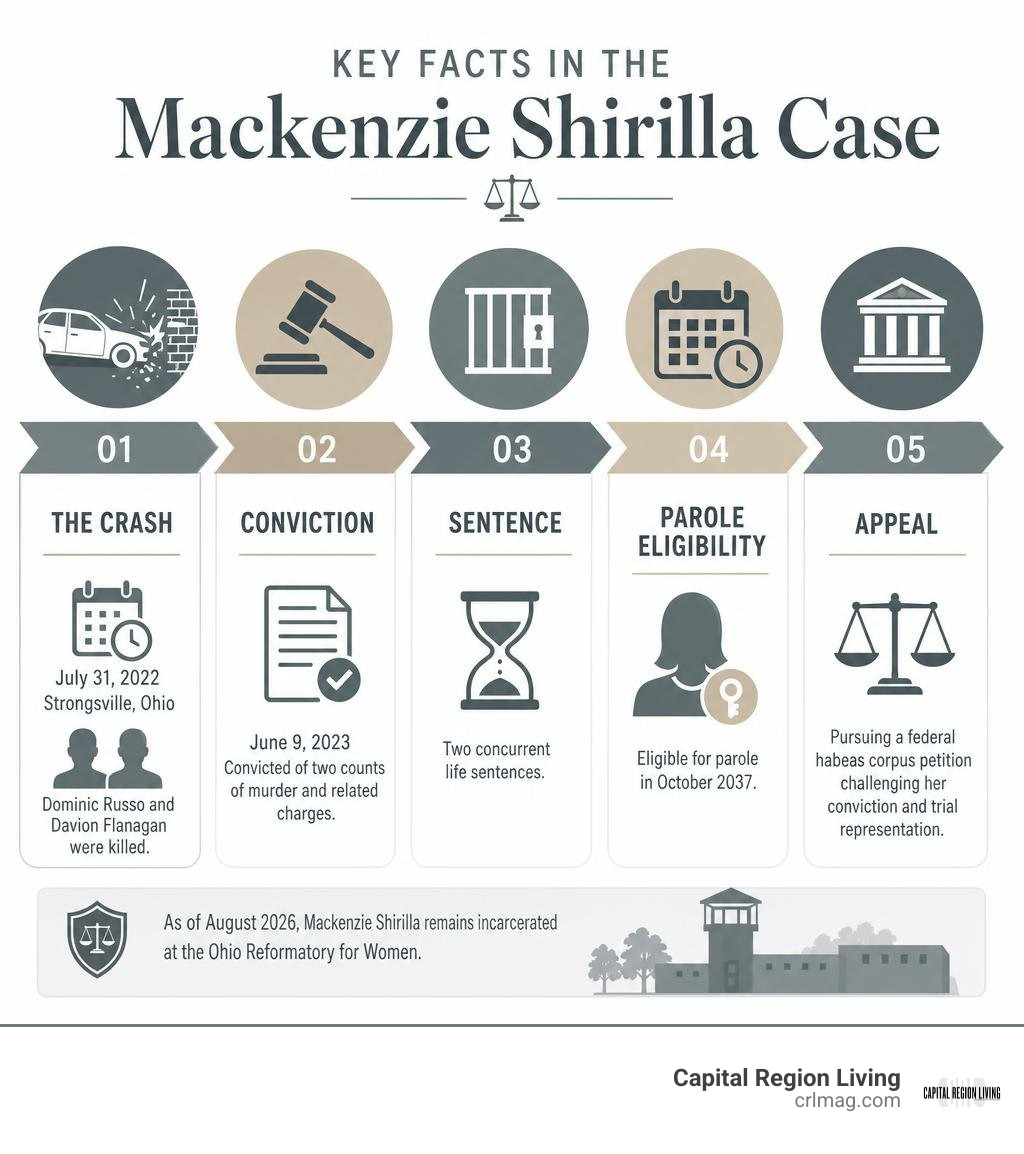
Mackenzie Shirilla is an Ohio woman serving two concurrent life sentences, with parole eligibility in October 2037, after her 2023 murder conviction for a 2022 crash that killed Dominic Russo and Davion Flanagan. Prosecutors argued that Shirilla, then 17, intentionally drove her car at more than 100 mph into a Strongsville commercial building. The court found the evidence proved murder, not merely a reckless or tragic crash.
The case has drawn sustained attention because it combines digital vehicle evidence, a troubled teen relationship, questions about a medical condition called POTS, and a continuing legal fight. As of August 2026, Shirilla remains incarcerated at the Ohio Reformatory for Women while pursuing a federal habeas corpus petition that challenges her conviction and trial representation.
Netflix’s The Crash has also pushed the case back into public discussion, renewing debate over the evidence, the appeal claims, and the impact on both victims’ families and Shirilla’s family.
The Crash and Trial of Mackenzie Shirilla
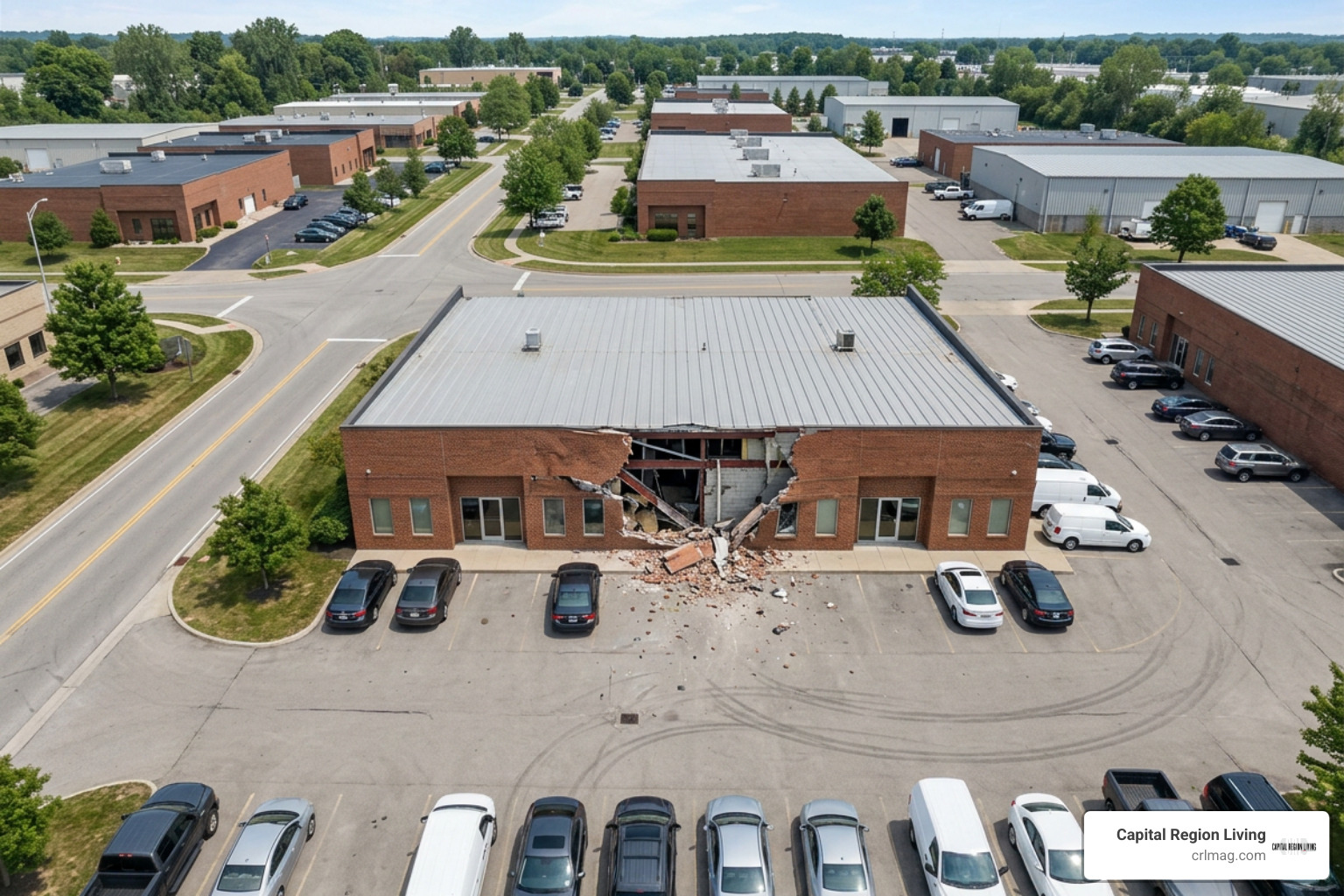
The tragic events unfolded during the early morning hours of July 31, 2022, in Strongsville, Ohio. Mackenzie Shirilla, then 17 years old, was driving a 2018 Toyota Camry carrying her 20-year-old boyfriend, Dominic Russo, and their 19-year-old friend, Davion Flanagan. Around 5:34 a.m., the vehicle sped into an industrial park near Progress Drive and Alameda Drive before slamming directly into the brick facade of the Plidco commercial building.
The impact was catastrophic. Both Russo and Flanagan were pronounced dead at the scene, while Shirilla survived with serious injuries. While early reports treated the collision as a devastating vehicular accident, investigators quickly uncovered forensic telemetry that transformed the inquiry into an intentional double homicide investigation.
The 2022 Strongsville Incident and Forensic Evidence
The Strongsville Police Department gathered critical electronic data from the vehicle’s Event Data Recorder (EDR)—commonly known as the black box—along with consumer mobile data from Life360. The telemetry revealed that the vehicle accelerated rapidly down the road, reaching speeds of 100 mph in a 35 mph zone.
Forensic reconstruction revealed two crucial details:
- The accelerator pedal was depressed at 100% full throttle leading straight up to the collision.
- The service brake was applied 0% of the time, showing no attempt to slow down or avoid the brick wall.
Investigators also discovered that Shirilla had used GPS tracking to scout the precise industrial park location three days prior to the crash. Witnesses and digital records further documented a volatile, toxic relationship history between Shirilla and Russo. Just weeks before the fatal wreck, Shirilla had made explicit verbal threats during arguments, shouting that she would crash the vehicle with both of them inside. Following months of digital forensics and medical recovery, authorities formally arrested Shirilla on November 4, 2022. For those interested in true-crime backgrounds and legal distinctions, additional details can be explored at Mackenzie Shirilla – .
The Bench Trial Verdict and Murder Conviction
Shirilla waived her right to a jury trial, electing instead for a bench trial before Judge Nancy Margaret Russo in the Cuyahoga County Court of Common Pleas. Over several days of intense testimony, prosecutors demonstrated that the vehicle consciously navigated a sharp right-to-left dogleg turn before Shirilla floored the throttle directly into the building.
In August 2023, Judge Russo delivered an unsparing verdict, describing Shirilla’s deliberate actions as “hell on wheels” and finding her guilty of 12 felony counts. The judge sentenced her to two concurrent terms of 15 years to life in prison, emphasizing that Shirilla chose a calculated course of death and destruction. Readers tracking the original legal filings can reference early reporting through When Was Mackenzie Shirilla Arrested? Inside Fatal Car Crash .
Legal Appeals and the POTS Medical Defense
Following her conviction, Shirilla’s defense team pursued multiple avenues of post-conviction relief. The defense argued that her actions were not homicidal premeditation, but rather the result of a medical crisis or an unexpected vehicular emergency. Central to these post-trial motions is Shirilla’s diagnosis of Postural Orthostatic Tachycardia Syndrome (POTS), a disorder of the autonomic nervous system.
Mackenzie Shirilla Defense Strategy: POTS and Ineffective Counsel
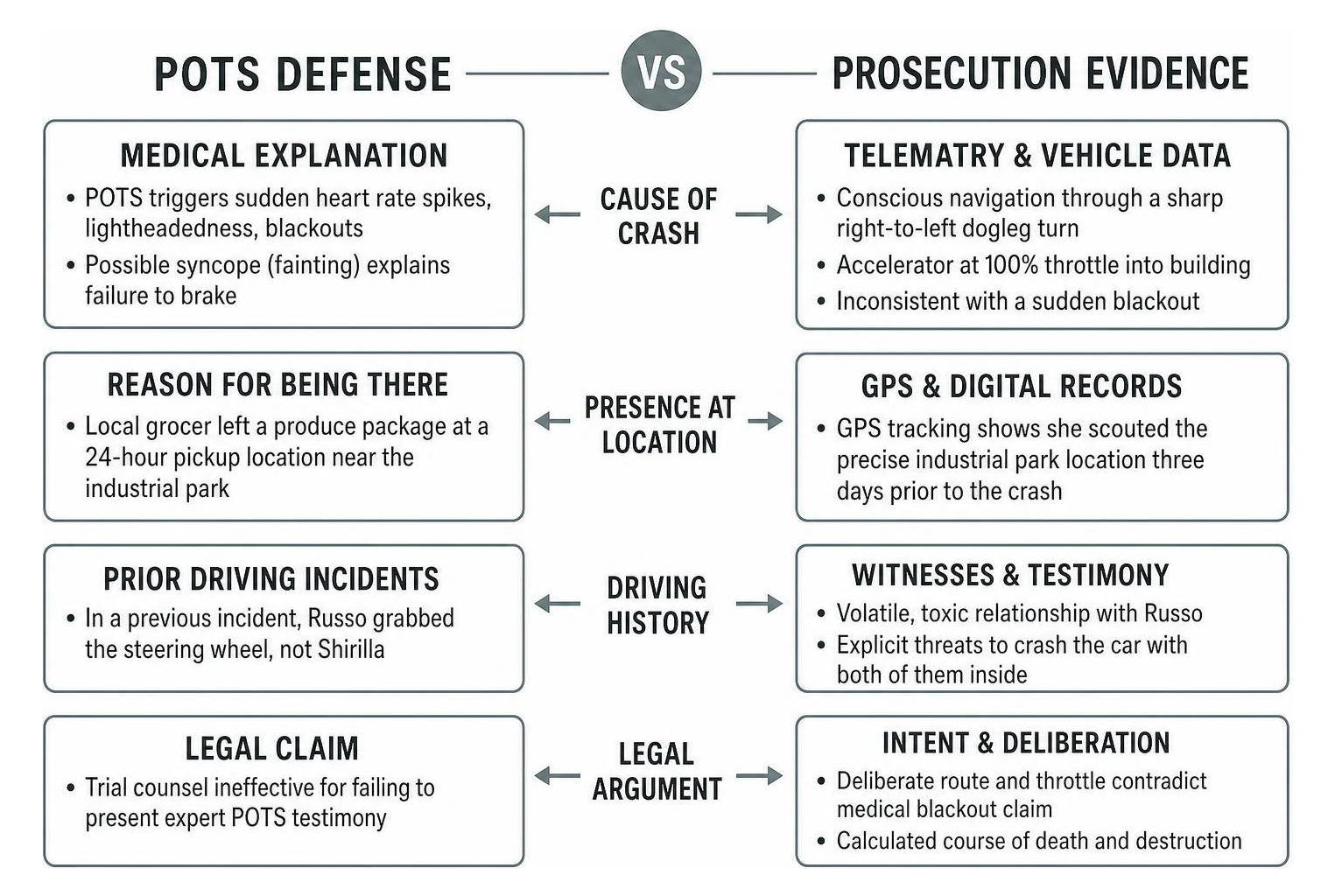
The defense’s primary legal argument asserts that trial counsel provided ineffective assistance by failing to present expert medical testimony regarding POTS. The condition can trigger sudden heart rate spikes, lightheadedness, and unexpected blackouts or fainting spells. Defense attorneys argue that a sudden medical syncope episode could explain why Shirilla did not brake.
In addition to the POTS diagnosis, the appellate defense introduced several supplementary claims:
- The Produce Pickup Route: Counsel claimed that a local grocer had left a produce package at a 24-hour pickup location near the industrial park, offering a routine, innocent explanation for why she drove to that specific neighborhood.
- Prior Driving Altercations: The defense contested earlier testimony about erratic driving threats, asserting that in a previous incident, Russo had grabbed the steering wheel rather than Shirilla steering dangerously on purpose.
However, state prosecutors consistently countered that the telemetry contradicted a medical blackout: a driver who passes out does not deliberately maneuver through a complex dogleg curve while simultaneously holding the accelerator at 100% throttle.
Ohio Supreme Court Rejection and the 2026 Federal Habeas Corpus Petition
Shirilla’s state-level appeals faced severe procedural setbacks. Her state petition for post-conviction relief was dismissed after being submitted one day past the strict statutory deadline. The Ohio Supreme Court ultimately declined to hear her appeal, ruling that lower courts lacked jurisdiction due to the untimely filing.
Having exhausted standard state appellate remedies, Shirilla’s legal team filed a federal petition for a writ of habeas corpus in the U.S. District Court. The federal petition seeks to overturn the murder convictions based on alleged constitutional violations under the Sixth and Fourteenth Amendments, claiming ineffective assistance of counsel, improper juvenile-to-adult court transfer procedures, and the wrongful exclusion of critical defense evidence. Extensive coverage of these post-trial maneuvers can be reviewed in Mackenzie Shirilla Challenges Conviction, Demands New Trial .
Life in Prison and Media Fallout

Today, Mackenzie Shirilla is serving her sentence at the Ohio Reformatory for Women in Marysville, Ohio, registered under inmate number W111780. Entering the facility with 301 days of jail time credit, she has adapted to the structured routines of state incarceration while her defense team continues federal litigation.
Life for Mackenzie Shirilla at the Ohio Reformatory for Women
Within the Marysville correctional facility, Shirilla secured employment in the institution’s food service department. Inmates working in these roles earn modest institutional wages, typically up to $24 per month, which are used for commissary purchases and phone credits. Further details regarding her prison duties are detailed in Mackenzie Shirilla, Convicted in 2022 Fatal Crash, Secures… .
Her incarceration record has not been entirely without incident. Public corrections files indicate minor disciplinary infractions, including an unauthorized contraband citation in 2024 and an inappropriate video call violation in 2025. Additional tabloid reporting regarding her incarceration atmosphere is available via Verifying Device . In recorded conversations, Shirilla has expressed hope for eventual rehabilitation, mentioning aspirations of working as a life coach if she is ever granted parole following her first scheduled board appearance in September 2037.
Impact of Netflix’s ‘The Crash’ and Family Aftermath
Public fascination with the case surged again following the release of the 90-minute Netflix documentary The Crash. The film revisited the crime scene forensics, the trial footage, and the ripple effects on everyone involved. The resulting media attention created significant personal and professional fallout for the Shirilla family.
Shirilla’s father, Steve Shirilla, appeared in media interviews and podcasts strongly defending his daughter, claiming the documentary selectively edited his interviews. He posited unconventional arguments asserting her innocence, which were widely covered by outlets such as Mackenzie Shirilla’s dad reveals bizarre reason he believes killer daughter is innocent . Following intense community backlash and public scrutiny over his documentary statements, Steve Shirilla was placed on administrative leave and ultimately did not return to his teaching position at Mary Queen of Peace School in Cleveland.
For the victims’ families, the continuous public attention has reopened painful wounds. Dominic Russo’s family continues to emphasize the clear evidence of domestic abuse and homicidal intent accepted by the court. Meanwhile, the family of Davion Flanagan—who was widely recognized as an innocent bystander catching a ride—established the Davion Flanagan Memorial Scholarship to honor his legacy and support local students.
Timeline and Broader Legal Implications
The legal journey from a suburban Ohio industrial park to federal court spans several years of forensic investigations, judicial rulings, and complex appellate maneuvers.
Chronology from 2022 Crash to 2026 Legal Filings
| Date | Key Event |
|---|---|
| July 31, 2022 | Mackenzie Shirilla crashes her Toyota Camry into the Plidco building at 100 mph, killing Dominic Russo and Davion Flanagan. |
| November 4, 2022 | Shirilla is formally arrested after police analyze vehicular black box data and mobile telemetry. |
| August 2023 | Following a bench trial, Judge Nancy Margaret Russo finds Shirilla guilty of 12 felony counts, including murder. |
| August 31, 2023 | Shirilla is formally admitted to the Ohio Reformatory for Women to begin her 15-years-to-life sentence. |
| 2024–2025 | State post-conviction appeals are dismissed; the Ohio Supreme Court declines review due to late filing. |
| August 2026 | Federal habeas corpus petition remains active in U.S. District Court; Shirilla continues prison employment. |
| October 29, 2037 | Official statutory parole eligibility date (first parole hearing set for September 2037). |
Juvenile Transfers, Domestic Strife, and Vehicular Murder Precedents
The Mackenzie Shirilla case establishes important legal talking points across several areas of criminal jurisprudence:
- Vehicles as Deadly Weapons: While most vehicular fatalities are prosecuted as vehicular homicide or involuntary manslaughter, this case demonstrated that digital telemetry (100% throttle, 0% braking, prior GPS route planning) can legally satisfy the standard for purposeful, premeditated murder under Ohio Revised Code 2903.02.
- Juvenile Court Transfers: Because Shirilla was 17 at the time of the crash but indicted as an adult, the transfer procedures highlight how judicial discretion weighs the severity of violent felony offenses against juvenile protections.
- Teen Dating Violence: The case has become a focal point for educators and advocates examining warning signs in toxic adolescent relationships, showing how domestic threats and destructive driving behaviors can escalate into fatal violence.
Frequently Asked Questions About Mackenzie Shirilla
When will Mackenzie Shirilla be eligible for parole?
Mackenzie Shirilla will reach her official parole eligibility date on October 29, 2037, with her initial hearing before the Ohio Parole Board scheduled for September 2037. She is serving two concurrent terms of 15 years to life and received 301 days of jail time credit.
What role did the POTS diagnosis play in her defense?
Her defense team argued that Postural Orthostatic Tachycardia Syndrome (POTS) caused a sudden medical blackout, explaining the lack of braking. However, trial evidence showed conscious steering through an intersection, and state courts rejected post-conviction petitions on procedural and jurisdictional grounds.
Why was Mackenzie Shirilla charged with murder instead of vehicular manslaughter?
Prosecutors charged Shirilla with purposeful murder because vehicular black box data proved 100% throttle acceleration into a brick wall without braking, GPS data showed previous site reconnaissance, and witnesses testified to prior threats that she would intentionally crash the car.
Conclusion
The Mackenzie Shirilla case remains one of the most thoroughly analyzed vehicular murder trials in recent history. By uniting vehicular black box telemetry, mobile GPS tracking, and witness testimony, prosecutors met the high legal bar required to prove purposeful murder rather than an unfortunate traffic accident. As federal judges review her habeas corpus petition in 2026, the case stands as a sobering case study on the evidentiary power of modern digital forensics, the dangers of unchecked domestic toxicity, and the lasting heartbreak left in the wake of violent tragedy. When you need a break from heavy true-crime deep dives and want to enjoy uplifting local traditions, we invite you to explore our community guides, including the 6 best sledding hills in the Capital Region.